
Key Takeaways
A well-planned gutter system does more than collect roof runoff. It directs water away from the fascia, siding, landscaping, and foundation while complementing the home’s exterior.
- Inspect the roof edge, fascia, drainage paths, and surrounding grade before choosing materials.
- Match gutter size, profile, slope, and downspout placement to roof area and local rainfall.
- Compare material, labor, access, removal, and repair costs before approving an installation.
- Gutter guards reduce debris buildup but do not remove the need for periodic inspection.
- Clean and check gutters in spring, fall, and after severe weather.
1. Plan your roofing gutter installation project
A successful roofing gutter installation starts before anyone cuts a gutter run or mounts a hanger. Walk around the property and study how water currently leaves the roof, where it lands, and what has been damaged over time. A clear plan helps separate a simple replacement from a larger drainage or fascia repair project. It also gives you better questions to ask during an estimate.
Assess your roofline, fascia, and existing drainage
Begin at the roof edge, where the gutter attaches to the fascia board. Look for soft wood, peeling paint, loose fasteners, warped sections, and gaps between the roof edge and gutter. Check existing outlets and downspouts as well, since a sound trough cannot compensate for a blocked or poorly placed discharge point.
Measure each roofline separately and note inside corners, outside corners, valleys, dormers, and changes in roof height. Photograph problem areas from the ground rather than climbing onto the roof without proper equipment. For a broader look at inspection and replacement decisions, the gutter damage signs guide can help organize what you observe.
Identify water-flow problems around the home
Overflow marks beneath the eaves, stained siding, washed-out mulch, and puddles near the foundation all point to a water-management problem. Standing water in a gutter may mean the run has lost its pitch, while water spilling at a corner can indicate a blocked outlet or undersized downspout. Trace the path after a rainstorm if conditions are safe, and pay attention to where the discharge ends.
The ground should carry water away from the foundation rather than funneling it back toward the house. If a basement wall is damp or soil is eroding below a downspout, the solution may involve an extension, splash block, or underground drainage—not just a new gutter section.
Decide between replacement, repair, and a new installation
Repair makes sense when the existing system is generally sound and the problem is localized. A detached hanger, small seam leak, loose elbow, or short damaged section may be corrected without replacing the entire run. Replacement is more practical when corrosion, repeated leaks, widespread sagging, or failing fascia appears across several elevations.
New installation is appropriate for an addition, a roofline that never had gutters, or a system that was poorly designed from the start. OnScene Gutters connects property owners with contractors for gutter repair, installation, replacement, and downspout services, so the scope can be matched to the actual condition rather than assumed from one visible symptom.
Account for local weather, tree cover, and roof design
Rainfall intensity, snow, ice, wind, and nearby trees all affect the design. A home beneath mature pines may need more frequent cleaning and a guard chosen for fine needles, while a house in a region with intense summer storms may need careful attention to outlet capacity and downspout placement. Freeze-thaw cycles also make secure fastening and clear discharge paths especially important.
Roof valleys and broad, steep sections concentrate runoff. Low-slope areas may need a different approach to pitch than long, steep roof planes. Consider access for future cleaning at this stage; a system that works on paper but cannot be safely inspected will be harder to maintain.
2. Choose the right gutter materials and profiles
Gutters are available in several materials, profiles, finishes, and joint configurations. The best choice balances weather exposure, appearance, budget, expected maintenance, and the condition of the supporting fascia. Do not choose by color alone: a beautiful system still needs adequate capacity and secure attachment.
Compare aluminum, copper, steel, and vinyl gutters
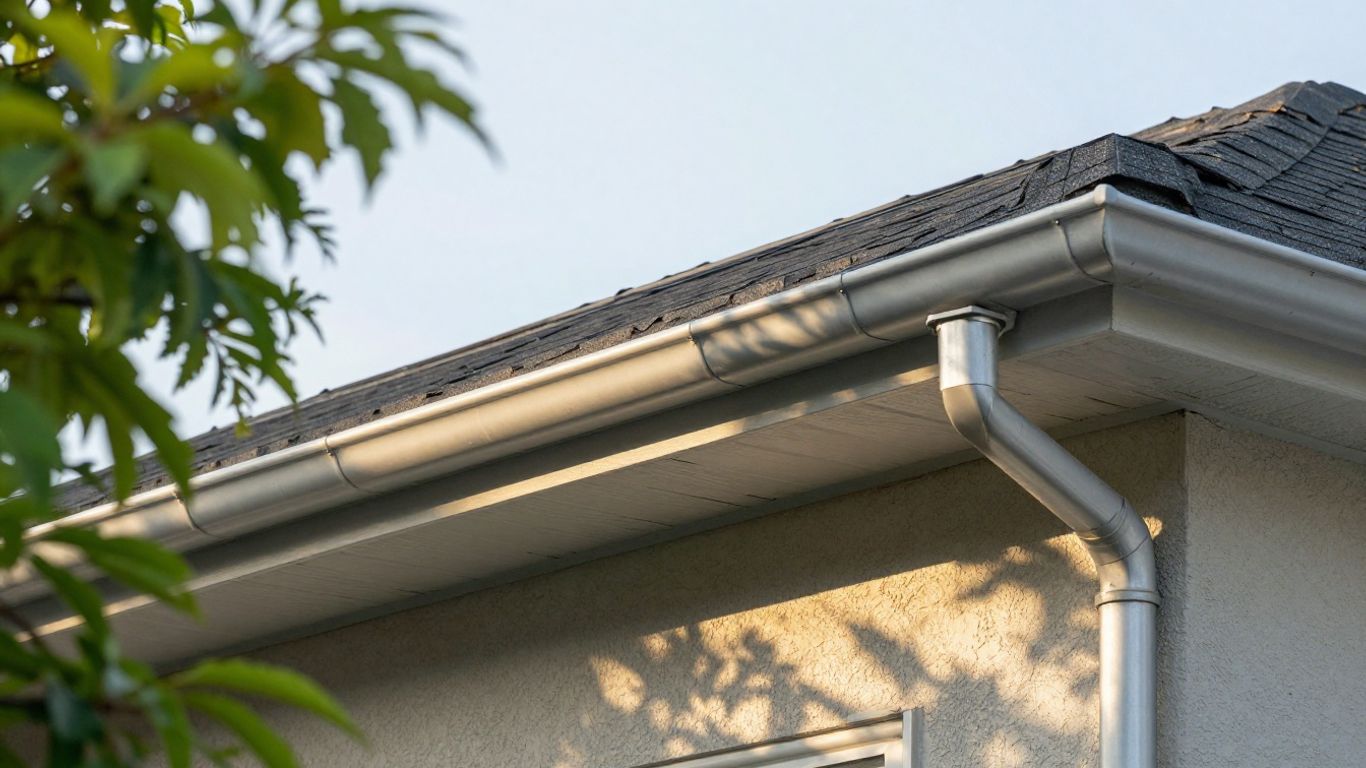
Aluminum is light, widely available, resistant to rust, and offered in many colors. Copper has a distinctive appearance and develops a natural patina, but it typically costs more and requires compatible hardware. Steel is strong and can suit demanding conditions, though its coating and maintenance deserve careful attention. Vinyl is light and simple to handle, but it can become brittle or distort with temperature changes.
The right material depends on the home as much as the budget. A coastal property, a shaded home with heavy debris, and a historic house may each call for different priorities. Ask for the material thickness, finish, fastener type, and expected maintenance—not merely the name of the material.
Weigh seamless gutters against sectional systems
Seamless gutters are roll-formed on site in continuous runs, with no mid-run joints. Fewer joints mean fewer places for leaks to develop along a long elevation, although corners, outlets, and end caps still require careful installation. Sectional systems are cut into shorter pieces and joined at seams, which can be useful for small repairs or certain do-it-yourself projects.
Installation quality matters in either case. A continuous run still fails if the fascia is weak, hangers are too far apart, or the pitch is wrong. OnScene Gutters offers access to contractors who specialize in seamless gutter installation and custom-fabricated systems, a useful option when long runs or complicated rooflines make joint reduction worthwhile.
Select between K-style and half-round gutters
K-style gutters have a decorative ogee-shaped front and are common on contemporary residential homes. Their profile can hold substantial water for its width and often blends easily with standard trim. Half-round gutters have a rounded interior and a more traditional appearance, making them a natural fit for older homes or period-inspired designs.
Profile selection should follow the roof, fascia, and downspout plan. A profile that looks right but is too small for the runoff will overflow. Likewise, a large trough may look awkward on a narrow eave or require a different hanger system.
Match gutter color and finish to the roof and exterior
Color can make gutters recede into the trim or become a deliberate architectural accent. Match them to fascia, soffits, window trim, or siding when the goal is a quiet appearance; a contrasting finish can define a roofline on a modern exterior. Copper and painted metal create very different visual effects as they age.
Bring samples outdoors before deciding because sunlight changes how finishes appear. Also confirm that replacement sections will match existing runs if only part of the system is being updated. A consistent finish is easier to achieve when all components—outlets, elbows, end caps, and downspouts—are ordered together.
3. Size gutters and downspouts for effective drainage
Sizing is a drainage calculation, not a guess based on the old system. The design should account for the roof area feeding each gutter run, the intensity of local rain, the roof pitch, and the number and location of downspouts. A professional can verify these details, especially where several roof planes converge.
Calculate gutter capacity for roof area and rainfall
Start by identifying which roof surfaces drain into each run rather than measuring the whole roof as one simple rectangle. Valleys and steep planes can send concentrated flows into a short section. Local rainfall patterns then help determine whether a standard residential profile is adequate or whether larger gutters, more outlets, or additional downspouts are needed.
Avoid treating a larger gutter as a complete fix. If the outlet, elbow, or vertical pipe cannot move the water quickly enough, the system may still overflow. A balanced design considers every part from the roof edge to the discharge point.
Determine the right gutter slope per foot
Gutter pitch is the slight slope that moves water toward an outlet. It should be visible enough to function but subtle enough that the run still looks straight from the ground. Long runs may use an outlet near the middle or at both ends rather than relying on one distant discharge point.
The exact slope depends on the system and layout, so installers should establish it with a level or laser rather than by eye. Too little pitch leaves standing water and sediment; too much pitch can look uneven and overload a single outlet.
Plan downspout placement and quantity
Downspouts should be distributed according to the roof sections they serve and the places where water can safely leave the property. Put outlets near concentrated runoff, corners, and long runs when appropriate. Make sure the lower end will not discharge onto a walkway, against a foundation wall, or into a low spot.
A practical placement review usually covers these points:
- The roof area assigned to each downspout.
- The length and pitch of the gutter run.
- Nearby doors, steps, windows, and walkways.
- Soil slope, planting beds, and foundation location.
After mapping those details, the installer can choose a route that balances hydraulic performance with a clean exterior appearance. The professional downspout placement advice is especially relevant for homes where runoff and foundation protection are closely connected.
Add downspout extensions, splash blocks, or underground drainage
The downspout is only the beginning of the discharge path. A splash block spreads water across a safe area, while an extension carries it farther from the foundation. Underground drainage can move water beneath a lawn or paved area, but it needs a suitable outlet and should not be buried without checking for utility lines.
Inspect the discharge after the first heavy rain. If water backs up, pools, or erodes the soil, adjust the endpoint or improve the drainage route. Water must leave the house before the gutter system can be considered complete.
4. Understand the professional installation process
Professional installation is a sequence of inspections, measurements, fastening, and testing. The crew should understand the roof edge before installing new components, especially if the old gutters concealed rot or poorly repaired fascia. A careful process reduces the chance that a cosmetic installation will leave the original drainage problem unresolved.
Inspect and prepare the fascia and roof edge
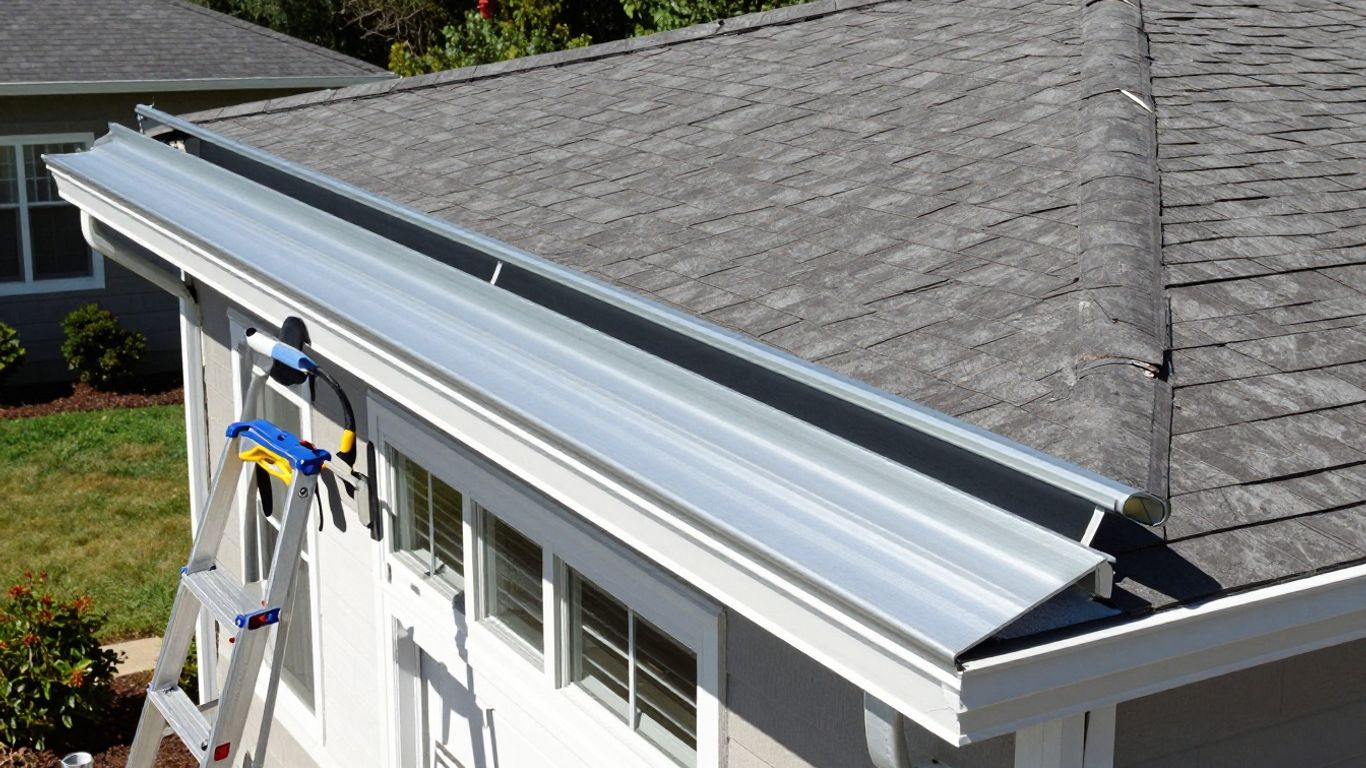
The fascia must provide a solid surface for hangers and screws. Installers remove or work around the old system, inspect exposed wood, and coordinate fascia or soffit repair when needed. They also check the roof edge and drip edge so water is directed into the gutter rather than behind it.
This is a good point to discuss any roof replacement, siding work, or trim updates planned for the near future. Coordinating related work can prevent newly installed gutters from being removed soon afterward. Never work near an unstable roof edge or elevated ladder setup without proper training and safety equipment.
Install drip edge, hangers, and gutter runs
The drip edge helps guide water off the roof and into the trough. Hangers are then positioned to support the gutter while preserving the intended pitch, with stronger attachment where the fascia and roofline demand it. Long runs are formed, cut, and joined at corners and end points according to the selected system.
Fasteners should be driven into sound material, not merely into deteriorated wood or thin trim. The finished run should appear straight from normal viewing distance, but appearance is secondary to a consistent slope and secure support.
Connect outlets, elbows, and downspouts
Outlets connect the horizontal gutter to the vertical downspout. Elbows guide the pipe around the eave and wall while keeping the route close to the structure. Each connection should be aligned, firmly fastened, and sealed where the system requires it.
The bottom section should discharge onto a splash block, extension, or planned underground line. Check that the outlet is not positioned directly over a doorway or another area where runoff will create a safety issue. Small routing decisions here have a large effect on how the property handles the next storm.
Test pitch, seams, and water flow before completion
Before the crew leaves, inspect the visible alignment and ask how the system was tested. Water should move toward the outlets without prolonged standing, and seams should remain dry during a controlled flow test. Check corners, end caps, outlet connections, and the first few feet of every downspout.
A final walkthrough should also confirm that extensions are secure and that removed materials have been cleared. Take photographs of buried drainage routes before they are covered. Those records can make future maintenance or landscaping work much easier.
5. Estimate roofing gutter installation costs
The cost of roofing gutter installation varies widely because homes vary widely. Material, profile, linear footage, access, roof complexity, downspout work, and local labor rates all affect the final figure. Treat online calculators as planning tools rather than contractor quotes, and ask for an itemized estimate.
See which factors affect the total price
A short, accessible one-story run usually requires less labor than a multilevel home with dormers, steep roof planes, and difficult ladder access. Copper and specialty finishes cost more than common aluminum or vinyl options. Removal of old gutters, fascia repairs, extra downspouts, underground drainage, and gutter guards can also change the scope.
The 2026 gutter installation cost guide is useful for reviewing the factors that shape national price ranges. It also reinforces why a property-specific measurement is needed before approving work.
Compare material, labor, and linear-foot costs
Many estimates use a linear-foot structure, but that number should not be read in isolation. A quote may include material, fabrication, hangers, outlets, downspouts, labor, sealants, and cleanup—or it may list some of them separately. Compare equivalent scopes rather than choosing the lowest headline price.
| Cost component | What it usually covers | Why it varies |
|---|---|---|
| Gutter material | Troughs, profiles, and finish | Material type, size, and coating |
| Labor | Measuring, mounting, joining, and testing | Roof height, access, and complexity |
| Downspouts | Outlets, elbows, vertical pipe, and discharge | Quantity, routing, and extensions |
| Removal | Taking down and hauling away old gutters | System condition and disposal needs |
| Repairs and add-ons | Fascia work, guards, or underground drainage | Existing damage and selected upgrades |
After reviewing the rows, ask whether the estimate includes tax, disposal, permits where applicable, and any repair allowance. Clear exclusions are just as useful as clear inclusions.
Account for home height, access, and removal fees
Two-story walls, steep grades, landscaping, fences, and tight side yards can slow installation and require specialized equipment. Old gutters may be difficult to remove if they are packed with debris or attached through damaged fascia. These conditions are legitimate cost drivers, not necessarily signs of inflated pricing.
Ask how the crew will protect plants, siding, windows, and paved surfaces. Also confirm who is responsible for hauling away the old material. A written scope prevents surprises when removal reveals concealed rot or disconnected downspouts.
Know when an on-site gutter cost estimate is necessary
An on-site estimate is essential when the roofline is complex, the home is more than one story, the fascia may be damaged, or drainage has already caused soil or foundation concerns. Measurements taken from satellite imagery can miss valleys, transitions, and access limitations. An in-person review also lets the contractor observe the grade and discharge areas.
OnScene Gutters connects homeowners and businesses with a nationwide network of contractors for installation, replacement, repair, cleaning, and drainage services. Request an estimate that separates the base system from optional guards, extensions, fascia work, and underground drainage.
6. Add gutter guards and related drainage protections
Gutter guards can reduce the amount of leaves and other debris entering a gutter, but they are not a substitute for a properly sized and pitched system. Their design should match the debris problem, roof layout, rainfall, and access needs. In some homes, improving downspouts and discharge routes will protect the foundation more effectively than adding a guard alone.
Compare screen, mesh, reverse-curve, and brush guards
Screen guards use openings to keep larger debris out, while mesh products use finer filtering surfaces. Reverse-curve designs guide water around a shaped surface and shed some debris. Brush guards fill the trough with bristles that allow water through while holding back larger material.
Each style has tradeoffs. Fine mesh may need attention when roof grit accumulates, and reverse-curve systems can require careful installation at the roof edge. Ask how the guard is removed for inspection and whether it is compatible with the existing gutter profile.
Choose guards for leaves, pine needles, and heavy rainfall
Large leaves are a different challenge from small pine needles, roof granules, or seed pods. A guard that handles one type of debris may perform differently under another. Heavy rainfall also calls for a design that accepts water quickly rather than shedding it over the front edge.
Observe the trees above the roof and the direction of prevailing storms. If branches touch the roof, trimming them may reduce debris more effectively than relying on a guard to handle everything. The best choice is tied to the actual property, not just a product category.
Understand the maintenance limits of gutter guards
Guards reduce cleaning frequency, but they do not make a system maintenance-free. Debris can collect on top, algae can grow in shaded areas, and small particles can reach the trough. Inspect the roof edge, guard surface, outlets, and downspouts at least seasonally.
A professional should explain how the selected guard is cleaned and whether sections can be lifted for service. Keep ladders away from unstable surfaces, and hire help when the roofline is high or difficult to access.
Protect foundations with extensions and underground systems
A guard cannot solve a downspout that empties beside the foundation. Use an extension or splash block where surface drainage is appropriate, and consider an underground line when above-ground discharge interferes with paths, planting, or lawn use. The outlet must still end in a location that can safely accept the water.
Check buried drainage after major storms for slow flow or backup. Keep records of the route and outlet, and have utility locations marked before digging. Foundation protection depends on the complete path, from roof runoff to final discharge.
7. Maintain gutters and spot early signs of failure
Even a carefully installed gutter system needs routine attention. Cleaning removes leaves and sediment, while inspections catch loose fasteners, corrosion, seam leaks, and blocked downspouts before a small issue spreads. A quick ground-level check after a storm is useful, but it cannot replace close inspection when symptoms appear.
Follow a spring and fall gutter cleaning schedule
Spring cleaning removes winter debris and checks the system before heavier seasonal rain. Fall cleaning is especially important under deciduous trees, and homes beneath dense tree cover may need additional visits. Remove debris from the trough, flush the downspouts, and confirm that water exits well away from the foundation.
The standard guidance is twice a year, with extra cleanings where trees drop heavily. OnScene Gutters provides gutter cleaning and debris removal through its contractor network, which can be a safer option for tall or difficult-to-access homes.
Check for leaks behind the fascia and at the seams
Look for damp streaks, peeling paint, stained soffits, and soft areas behind the gutter. During a controlled hose test, watch corners, end caps, outlets, and sectional seams. Water appearing behind the gutter may point to a missing or poorly aligned drip edge rather than a simple seam problem.
Do not seal over rotten fascia or a loose connection without addressing the support first. Temporary caulk can hide the symptom while water continues to reach the structure. Document the location and timing of each leak so the repair can target the cause.
Recognize gutters pulling away, sagging, or overflowing
A gutter that pulls away from the fascia may have failed fasteners, overloaded debris, or damaged supporting wood. Sagging usually creates low spots where water and sediment collect. Overflow at one location may indicate a clog, but repeated overflow during clean conditions can signal inadequate capacity, poor pitch, or a misplaced downspout.
From the ground, note these warning signs:
- Water pouring over the front edge during ordinary rain.
- Visible gaps between the gutter and fascia.
- Rust holes, split seams, or staining below joints.
- Soil erosion or pooling beneath a downspout.
These observations help a contractor decide whether a gutter reattachment, pitch correction, repair, or replacement is appropriate. If a section is hanging near a walkway or entrance, keep people clear and arrange professional help rather than attempting a ladder repair during bad weather.
Prepare gutters for storms, ice, and seasonal debris
Before a major storm, clear leaves and confirm that downspout extensions are secure. Look for loose sections that wind could pull farther from the fascia. After the storm, inspect for dents, detached elbows, overflowing points, and new pooling around the foundation.
In cold climates, standing water can freeze and add stress to the system. Keep gutters and downspouts clear before freezing weather, but do not chip ice from an elevated position or climb a ladder in icy conditions. A post-storm inspection can identify damage while the cause is still easy to trace.
Conclusion
A dependable gutter system begins with an honest assessment of the roofline and ends with a safe discharge path, careful installation, and regular maintenance. Choose materials and profiles for the home’s conditions, size the system around real runoff, and treat fascia and downspout work as part of the same drainage plan. When height, structural damage, or complex routing is involved, an on-site professional assessment is the safer way to protect the property.
Frequently Asked Questions
How much does new gutter installation cost?
Cost depends on material, linear footage, home height, roof complexity, access, downspouts, removal, and local labor rates. An on-site measurement is the most reliable way to receive an accurate estimate.
How often should gutters be cleaned?
Twice a year, usually in spring and fall, is a common starting schedule. Homes under heavy tree cover may need additional cleanings, especially before periods of heavy rain or winter weather.
Are gutter guards worth it?
Gutter guards can reduce cleaning frequency, particularly on tall homes or properties with heavy leaf fall. They still need inspection because debris can collect on top and fine material can reach the gutter.
What gutter material lasts the longest?
Longevity depends on climate, installation quality, maintenance, and exposure. Copper, aluminum, steel, and vinyl each have different strengths, costs, and care requirements, so the best choice depends on the property.
What size gutters does a home need?
The appropriate size depends on the roof area feeding each run, roof pitch, rainfall intensity, and downspout layout. A contractor should size the complete system rather than selecting a profile by appearance alone.
Should downspouts empty near the foundation?
No. Downspouts should direct water away from the foundation through a suitable extension, splash block, or properly designed underground drainage route.
Can damaged gutters be repaired instead of replaced?
Yes, localized leaks, loose hangers, detached sections, and minor connection problems may be repairable. Widespread corrosion, repeated sagging, failing fascia, or extensive damage may make replacement more practical.