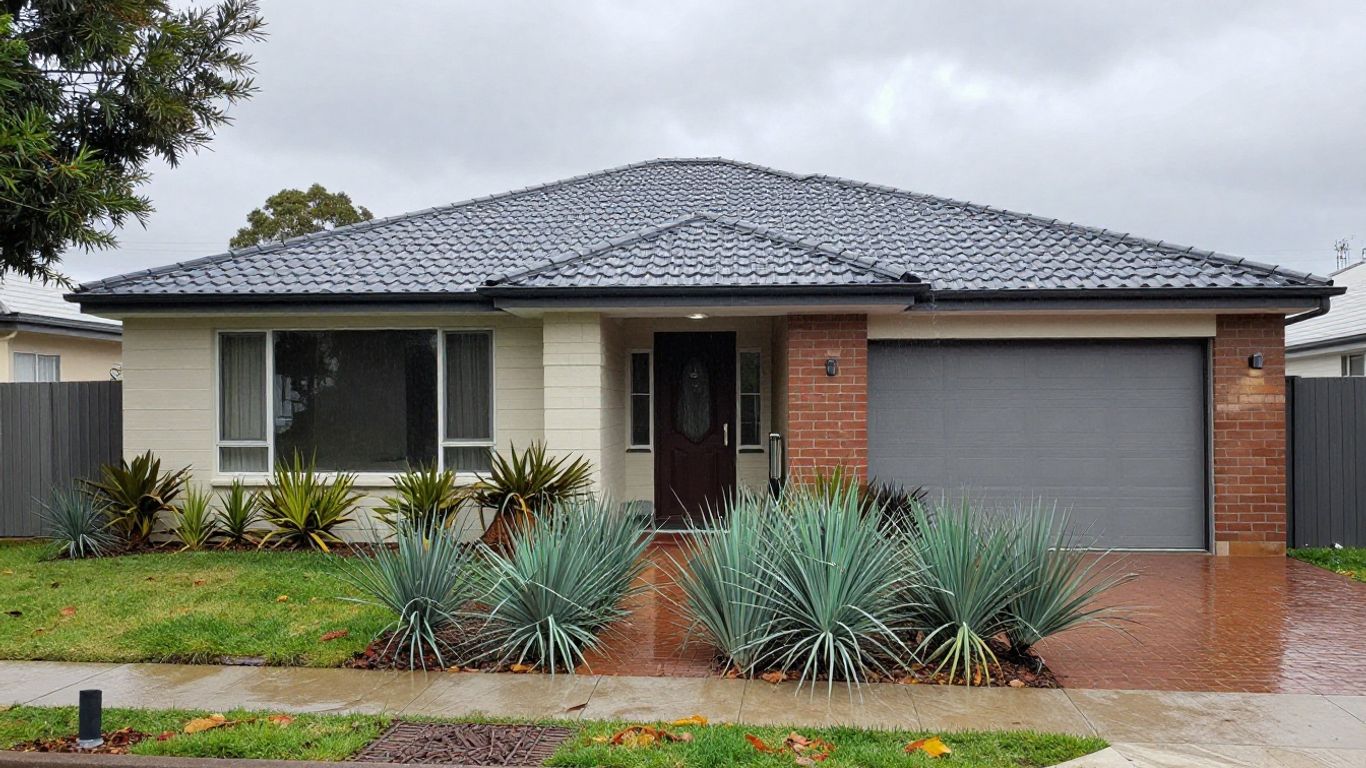
Key Takeaways
A successful Perth gutter replacement project starts with a careful inspection, realistic budgeting, and a drainage plan that suits the home. The right materials and installation details can prevent repeat water damage.
- Replace gutters when corrosion, sagging, separation, or repeated leaks affect the system.
- Budget for materials, roof-line length, access, removal, fascia condition, and downspouts.
- Choose the profile and material based on rainfall, roof design, maintenance needs, and appearance.
- Make sure gutters have a consistent slope and that downspouts discharge well away from the foundation.
- Compare written quotes, installation details, insurance, and warranty terms before hiring.
When gutter replacement is the right solution
Gutters are easy to overlook until rainwater starts spilling over an entry, staining a wall, or collecting beside the house. A replacement is not always necessary, but repeated repairs can hide a wider failure. The goal is to restore dependable water management before the damage spreads. For additional background, this Perth gutter replacement guide covers common warning signs and installation considerations.
Visible signs of failing gutters
Walk around the property after rain and look for water pouring over the front edge, sections that sag, or joints that drip. Rust, holes, peeling paint, and gutters pulling away from the fascia are also useful clues. Downspouts that remain blocked or detached after cleaning may point to a system that is no longer functioning as a whole.
A single loose bracket or small seam leak may be repairable. Several symptoms along the same roof edge suggest the metal or fixings have deteriorated more broadly. Do not climb onto a wet roof or unstable ladder to inspect them; a ground-level check followed by a professional assessment is safer.
When repairs are no longer cost-effective
Repairs make sense when damage is isolated and the surrounding gutter run is straight, firmly attached, and free of widespread corrosion. Replacement becomes more practical when leaks return, multiple sections have failed, or the fascia behind the gutter is soft. Matching old sections can also be difficult if the original profile is no longer readily available.
A contractor should explain whether the problem is the gutter itself, the hangers, the fascia, or the drainage layout. That distinction matters. Replacing a short section without correcting the underlying slope or support can lead to another failure soon after.
How damaged gutters affect roofs, walls, and foundations
Overflowing water can wet fascia boards and soffits, stain exterior walls, and erode soil near footings. Water that backs up beneath the roof edge may also contribute to rot or damp insulation. These effects are often gradual, so the first visible sign may appear some distance from the original gutter problem.
A good replacement plan treats the gutters and downspouts as one system. It should direct water away from the building, manage concentrated discharge at corners and valleys, and account for any existing grading or drainage problems around the home.
Why Perth’s weather can accelerate gutter damage
Perth homes deal with intense sun, seasonal heavy rain, wind-blown debris, and occasional storm impacts. Heat and ultraviolet exposure can age some finishes, while sudden rainfall can expose undersized or poorly sloped runs. Leaves and small branches can also collect at outlets and create overflow during a storm.
This does not mean every home needs the same upgrade. Roof area, tree cover, coastal exposure, and the condition of the fascia should guide the decision. A local inspection is more useful than choosing a replacement solely by appearance.
How much Perth gutter replacement costs
The cost of Perth gutter replacement varies too much for a single reliable figure. Linear footage, material, roof height, access, profile, and the number of downspouts all affect the estimate. The gutter installation cost guide is useful for understanding national cost factors, but a local, itemized quote is still needed for a Perth property.
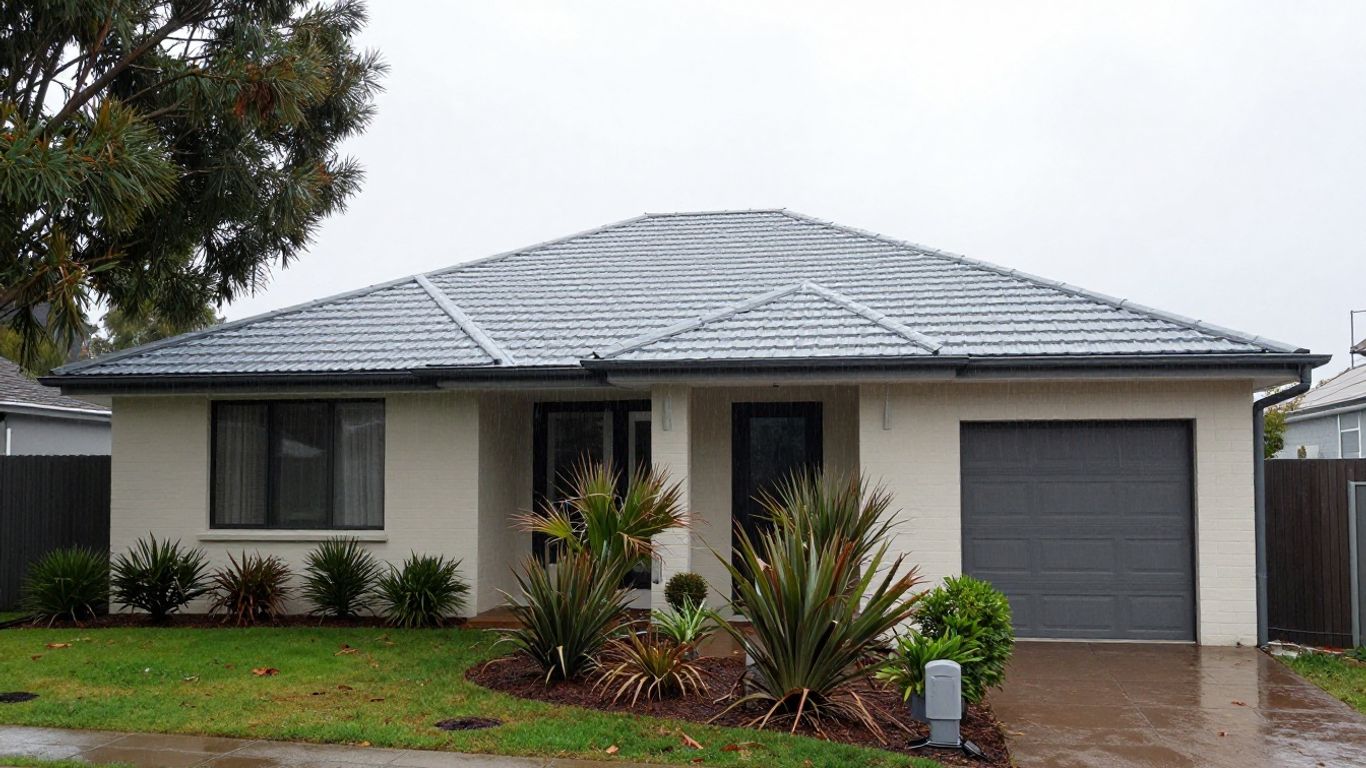
Main factors that influence the estimate
Start with the total length of guttering, then add corners, miters, outlets, end caps, and downspouts. A simple single-story roof usually requires less labor than a multi-level home with tight access or several roof sections. Fascia repairs, soffit work, and disposal of old material can add to the scope.
The material and profile influence both the purchase price and long-term maintenance. A quote should state the proposed size, finish, thickness or specification where relevant, number of downspouts, and whether removal is included. A written scope prevents surprises when the work begins.
Comparing budget, mid-range, and premium materials
Material choice is a balance between upfront cost, durability, maintenance, and the visual character of the home. The following comparison is a starting point rather than a substitute for checking locally available products.
| Material | Typical strengths | Points to consider | Common fit |
|---|---|---|---|
| Aluminum | Lightweight, corrosion-resistant, widely available | Can dent and may need careful handling | Most residential replacements |
| Steel | Strong and resistant to impact | Heavier and may require finish maintenance | Exposed or high-wear locations |
| Vinyl | Low initial cost and simple upkeep | Can become brittle or distort with heat | Basic, smaller applications |
| Copper | Distinctive appearance and long service potential | Highest material cost and changing patina | Character homes and premium designs |
The best value is not always the lowest initial quote. Consider how the material suits the roof, local exposure, expected maintenance, and the cost of replacing it again later.
Labor, access, height, and removal costs
Labor is shaped by how safely the crew can reach each gutter run. Two-story walls, steep roof pitches, landscaping, fences, and limited driveway access can require additional equipment or more careful handling. Removing old gutters also takes time, especially when fasteners are corroded or the fascia needs attention.
Ask whether the estimate includes access equipment, old-gutter disposal, downspout replacement, and cleanup. If the contractor identifies rotten timber or damaged roof-edge components, request a separate line item rather than accepting a vague allowance.
How to request an accurate on-site quote
Provide photos from the ground, note where water overflows, and identify any sections that pulled loose after a storm. The contractor should measure the roof edges, inspect attachment points, check discharge locations, and discuss any fascia or soffit concerns. An on-site visit is particularly important when the house has additions or several roof levels.
Use the visit to ask for two options if appropriate: a repair plan and a full replacement plan. Comparing the expected service life, inclusions, and risks of each option makes the decision clearer than comparing totals alone.
Choosing the best gutter material and profile
A gutter system should look appropriate on the building while moving water reliably. Material is only one part of the choice; profile, size, joints, finish, and downspout layout matter as well. Perth homeowners should also consider sun exposure, coastal air, trees, and how often they can safely arrange cleaning.
Aluminum, steel, vinyl, and copper compared
Aluminum is a common residential option because it is light, versatile, and available in many finishes. Steel offers greater rigidity but adds weight and needs protection from corrosion. Vinyl is inexpensive and simple to maintain, although local heat and movement should be considered before selecting it.
Copper is chosen mainly for its appearance and premium character. It develops a changing patina and costs more than mainstream options. Whichever material you select, make sure the fixings, outlets, sealants, and adjoining roof-edge details are suitable for it.
Seamless versus sectional gutter systems
Seamless gutters are formed in continuous runs, which reduces the number of mid-run joints where leaks can develop. Sectional systems arrive in set lengths and can be practical for smaller or straightforward repairs. Both still depend on sound fascia, correct slope, secure hangers, and well-sealed corners.
On Scene Gutters connects property owners with contractors who provide seamless gutter installation, gutter repair, installation, and replacement through a nationwide network. That documented service range fits projects where a continuous, custom-fabricated run is being considered, without making a promise about a particular property.
K-style and half-round profiles
K-style gutters have a decorative ogee-shaped front and are common on residential homes. Their angular back can sit neatly against many fascia designs. Half-round gutters have a curved interior and a softer traditional appearance, making them a natural choice for some older or classically styled properties.
Profile affects capacity, brackets, outlets, and visual proportion. Bring photos of the roofline or ask for a small material sample before approving a color and shape, especially when the gutters are prominent from the street.
Matching gutters to your roof and home design
A close color match can make gutters recede, while a contrasting finish can highlight trim and architectural lines. Check the roof covering, fascia color, window frames, and downspouts as a group rather than choosing the gutter color in isolation.
The contractor should also explain how corners, box sections, and downspouts will appear. A technically sound system can still look untidy if outlets are placed randomly or long runs are not aligned with the home’s existing lines.
Planning a gutter replacement project
Good planning reduces measurement errors and helps the installer identify related work before materials arrive. Begin with a roof-edge survey, then consider water volume, downspout locations, and the condition of the surfaces supporting the system. This is also the stage to coordinate roof or exterior repairs.
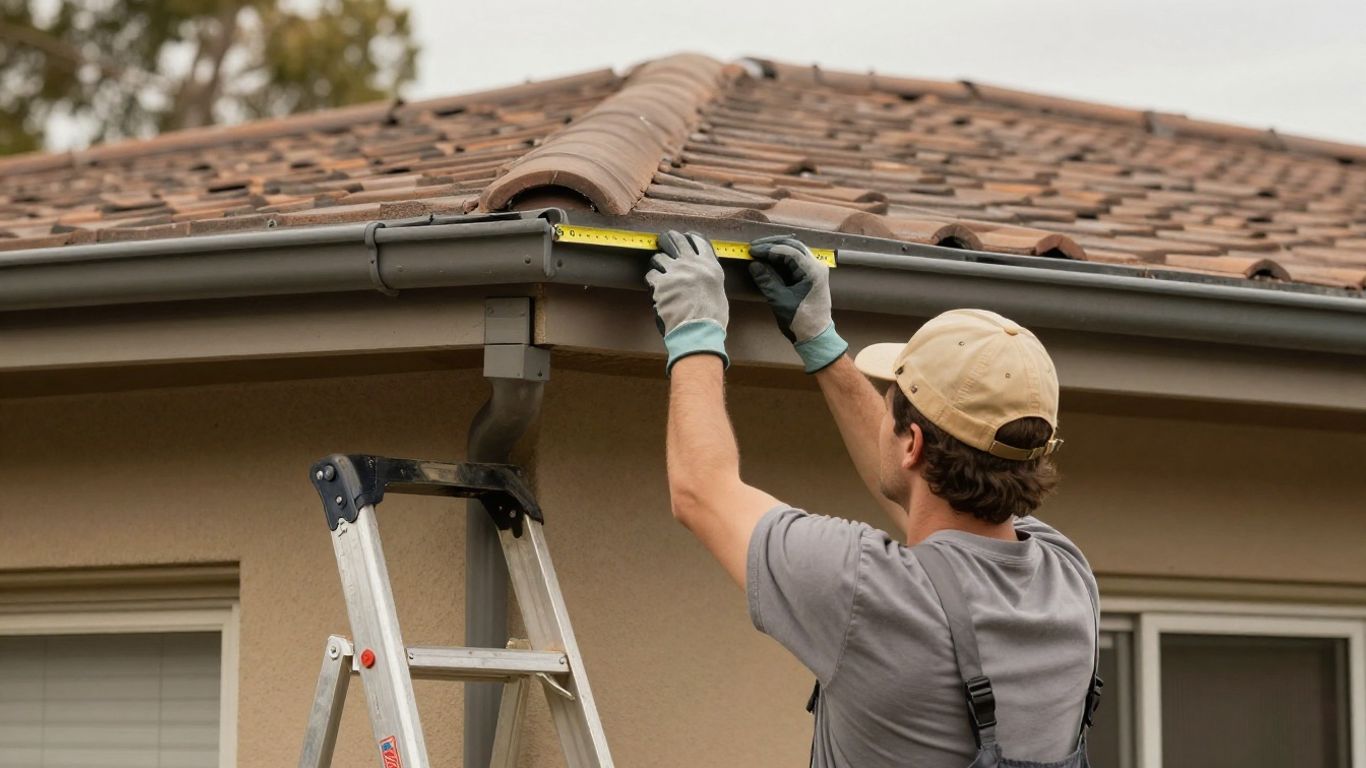
Measuring roof edges and gutter runs
Measure each continuous roof edge separately and record corners, internal valleys, external corners, and changes in height. Do not rely only on a rough perimeter measurement. Add the locations of existing outlets and note where water currently discharges.
Ground measurements can help with an initial conversation, but roof access and safety are professional tasks. A contractor may find that the visible fascia line does not follow the actual roof edge or that an extension changes the drainage path.
Selecting the right gutter size
Gutter size should relate to the roof area feeding each run, the roof pitch, and the intensity of local rainfall. Larger is not automatically better if the outlets and downspouts cannot carry the same flow. A qualified installer can recommend a balanced combination of gutter dimensions and outlets.
The quote should identify the proposed size rather than using a broad phrase such as “new gutters.” That detail makes competing estimates easier to compare and gives you a record of what was approved.
Determining downspout capacity and placement
Downspouts need enough capacity for the water collected by their connected runs. Place them near natural low points and avoid concentrating discharge beside doors, paths, or foundations. Long uninterrupted runs may need additional outlets, particularly where roof valleys feed a single edge.
A practical planning checklist includes the following:
- Mark every existing downspout and note whether it overflows.
- Identify low points, roof valleys, and sections with visible ponding.
- Decide where extensions can discharge without eroding soil.
- Check whether underground drainage is clear and accessible.
After the layout is marked, the installer can explain why each outlet is staying, moving, or being added. That conversation is more valuable than simply counting downspouts from the ground.
Coordinating fascia, soffit, and roof repairs
Gutters attach to fascia or other structural supports, so damaged timber should be addressed before new sections are installed. Loose soffits, failing roof edges, and missing flashing may also need coordination. Installing over soft or unstable material can compromise the new system.
Ask which work is included in the gutter quote and which work requires another trade. Clear sequencing helps prevent a newly installed gutter from being removed again for roof or fascia repairs.
What happens during professional installation
Professional installation is more than taking down old metal and fastening up new sections. The crew should inspect the support surface, establish a drainage path, and test connections as the work progresses. Safety controls are essential around ladders, roofs, driveways, and overhead obstacles.
Removing old gutters and inspecting the fascia
The old system is removed carefully so the fascia can be checked rather than covered immediately. The installer looks for rot, loose boards, damaged corners, and failed fasteners. Debris and old sealant should be cleared from the work area before new brackets are positioned.
If repairs are needed, document their location and cost before the installation continues. This keeps the replacement focused on a sound base and avoids concealing a structural problem.
Installing brackets, hangers, and gutter sections
Hangers and brackets must be spaced and fixed according to the selected system and the condition of the fascia. Continuous runs are formed to the measured roof edge, while sectional systems are joined and sealed at their seams. Corners, end caps, and outlets need careful alignment.
The visible result should be straight without excessive waves or gaps. Fasteners should sit securely, and the installer should protect the roof edge while completing the connections.
Creating the correct gutter slope
Gutters need a controlled fall toward their outlets so water does not sit in the channel. Too little slope can cause ponding; too much can make the system look uneven and overload one end. The installer sets the fall across each run rather than assuming the fascia is level.
A water test can reveal low spots, slow outlets, and leaking joints. Any adjustment is easier before ladders and equipment leave the site, so include testing and final inspection in the agreed scope.
Connecting downspouts and extensions
Downspouts are connected with compatible outlets and elbows, then secured so they do not rattle or pull away from the wall. Extensions should carry water far enough from the foundation to avoid immediate pooling. Where the site permits, the discharge can connect to an appropriate drainage route.
The finished system should be checked during or after water testing. Look for leaks at joints, overflow at outlets, loose straps, and discharge that undermines soil or creates a trip hazard.
Improving drainage and reducing maintenance
Replacement is a good opportunity to correct drainage weaknesses that were easy to overlook. Gutters can be new and still perform poorly if outlets are undersized, extensions are short, or debris quickly blocks the channel. A modest amount of planning can make future cleaning safer and less frequent.
Extending downspouts away from the foundation
Water should not empty directly beside the foundation, basement wall, or narrow side path. Use suitable extensions or a planned drainage connection to move discharge to a stable area. Watch the outlet during rain and look for erosion, ponding, or water flowing back toward the house.
The correct distance depends on site grading, local conditions, and the drainage method. A contractor can recommend an arrangement that does not simply move the problem to a neighboring wall or walkway.
Adding gutter guards for leaves and debris
Gutter guards can reduce the amount of leaves and debris entering a system, but they do not remove the need for inspection. Different designs handle leaves, seeds, and fine roof grit differently. They must also be compatible with the gutter profile and installed without blocking outlets.
Quality guards are most useful where cleaning is difficult or tree cover is heavy. Ask how the guard will be removed for service and who remains responsible for checking the roof edge and downspouts.
Considering underground drainage and rain chains
Underground downspout drainage can keep water off paths and improve the appearance of the exterior, but buried lines must be planned and kept accessible for maintenance. Before installation, confirm the route, outlet, fall, and likely blockage points. Rain chains can be attractive for smaller roof sections when they discharge into a suitable basin or bed.
Neither option should be selected only for appearance. The drainage route still needs to handle the expected flow and protect the building during heavy rain.
Building a seasonal cleaning and inspection routine
Even a well-designed system needs periodic attention. A simple routine helps catch small problems before they become replacement work:
- Inspect after major storms for loose sections, dents, and displaced downspouts.
- Clean in spring and fall, with extra checks beneath heavy tree cover.
- Flush downspouts and confirm that extensions discharge freely.
- Check fascia, exterior walls, and soil for fresh water staining or erosion.
Keep notes and photos of recurring trouble spots. If the same section overflows after cleaning, the cause may be slope, capacity, or roof runoff rather than debris alone.
How to choose a Perth gutter replacement contractor
The contractor you choose affects the safety, appearance, and performance of the finished system. Look beyond a low total and ask how the work will be measured, supported, sloped, tested, and documented. A clear process is often a better sign than a long list of generic promises.
Checking licensing, insurance, and local experience
Ask for current licensing where required, public liability insurance, and evidence of experience with comparable roof types. Perth experience is useful because the contractor should understand local sun, storms, coastal conditions, and common building details. Verify the information rather than relying on a verbal assurance.
On Scene Gutters connects homeowners and businesses with a nationwide network of trusted contractors specializing in seamless gutters, gutter repair, installation, and replacement. When using a network service, confirm who will attend the property and which business is responsible for the written quote and work.
Comparing quotes and written scopes of work
Compare the same details across quotes: material, profile, size, linear footage, outlets, downspouts, removal, access, fascia repairs, cleanup, and tax. A quote that omits several of these items may look cheaper only because the scope is incomplete.
Ask the contractor to explain assumptions and exclusions. Keep the accepted scope, color, product specification, start conditions, and payment schedule together so there is less room for misunderstanding.
Reviewing warranties and material specifications
A warranty should state what is covered, for how long, and whether labor, finishes, leaks, or installation defects are treated differently. Material specifications should identify the product or grade clearly enough to compare with another proposal.
Also ask what maintenance is expected and what could void coverage. A warranty is most useful when the installer provides a practical inspection and service process, not just a broad sentence in a proposal.
Preparing questions before hiring a contractor
Write your questions before the site visit so urgency does not push important details aside. Useful questions include:
- What is causing the current overflow, sagging, or leaking?
- Will you inspect and repair the fascia before installation?
- How will you size and position the downspouts?
- What exactly is included in removal, cleanup, testing, and warranty service?
The answers should be specific to the property. If a contractor cannot explain the drainage plan or gives a price without measuring, obtain another assessment before committing.
Conclusion
A well-planned Perth gutter replacement protects more than the roof edge: it manages runoff, reduces strain on walls and foundations, and can improve the home’s appearance. Compare materials and profiles carefully, insist on a measured written scope, and treat fascia condition and downspout discharge as part of the same project. With those details settled, the replacement is far more likely to perform as intended through Perth’s changing weather.
Frequently Asked Questions
How do I know if my gutters need replacement?
Repeated leaks, widespread corrosion, sagging, separation, and overflow after cleaning are strong signs. A professional inspection can distinguish a localized repair from a system-wide failure.
How much does gutter replacement cost in Perth?
Cost depends on material, linear footage, roof height, access, labor, removal, fascia condition, and downspout work. An on-site measurement and itemized quote provide the most dependable estimate.
Which gutter material is best for a Perth home?
Aluminum is a common practical choice, while steel, vinyl, and copper suit different budgets, appearances, and exposure conditions. The best option depends on the roof design and maintenance expectations.
Are seamless gutters better than sectional gutters?
Seamless gutters have fewer mid-run joints, which can reduce potential leak points. Sectional gutters can still perform well when they are correctly joined, supported, sloped, and maintained.
What size gutters do I need?
The appropriate size depends on roof area, pitch, rainfall intensity, and outlet capacity. A contractor should calculate the system rather than choosing a size based only on the existing gutter.
How often should gutters be cleaned?
Twice a year is a common starting point, with more frequent checks under heavy tree cover or after major storms. Guards can reduce debris but do not make a system maintenance-free.
How far should downspouts extend from the house?
Downspouts should discharge far enough away to prevent pooling beside the foundation and should follow the property’s grading and drainage plan. The exact arrangement depends on soil, slope, and whether underground drainage is used.