
Key Takeaways
Regular gutter cleaning is the most effective way to protect your home from water damage and structural decay. Use this guide to streamline your seasonal maintenance process while prioritizing your personal safety above all else.
- Perform a thorough gutter inspection at least twice a year.
- Always prioritize your safety by using proper ladder stabilization.
- Invest in heavy-duty gloves to handle sharp debris and sludge.
- Use a dedicated gutter scoop for efficient clearing without hand strain.
- Confirm downspouts are clear to allow for effective water drainage.
Essential gear for safe gutter cleaning
Proper preparation is the foundation of any exterior maintenance project, ensuring you have the right tools to get the work done without unnecessary risk. Before climbing, gather all necessary equipment to avoid needing to hop on and off the ladder, which is where most accidents occur.
Personal protective equipment requirements
High-quality gloves are non-negotiable for protection against sharp gutter edges, metallic screws, and biological waste that often accumulates inside. Wearing a long-sleeved shirt and sturdy, rubber-soled shoes helps defend your skin from scratches and provides the necessary traction for movement. You should also consider keeping safety glasses on to prevent any flying debris or dirt from irritating your eyes while you reach into tight spaces. This is the safest way to maintain gutters and keep your home exterior in excellent condition.
Choosing the right ladder type
Selecting a stabilizing ladder is paramount to your success, as stability prevents common accidents during high-work operations. An extension ladder is generally preferred over a step ladder because it offers better reach and adjustable height settings. Ensure your ladder is rated for the total weight it will carry, including you and your tools, to maintain peak structural integrity during use.
Recommended tools for debris removal
Having the right set of tools turns a difficult chore into a manageable task. Using specialized equipment allows you to move through the process quickly. Consider using a balanced set of tools to minimize fatigue while working:
- A specialized gutter scoop for clearing compacted leaves
- A sturdy plastic bucket with a hook for debris disposal
- A small hand trowel for tight corners and seams
- A heavy-duty pair of gardening gloves to avoid cuts
These tools are essential for any homeowner looking to manage their gutter cleaning, which remains a critical task for long-term health.
Optional equipment for efficiency
Beyond basic hand tools, accessories like gutter guards or specialized hose attachments can significantly reduce the time you spend on maintenance. Some homeowners find that using a high-pressure nozzle helps clear residual fine silt that a scoop might miss. While these are optional, incorporating them helps in managing gutter maintenance with far less frequency.
Preparing your workspace and ladder safety
Setting up your environment correctly is the difference between a productive afternoon and a dangerous incident that might force you to contact Water Damage Repair USA professionals for emergency structural support. Take your time to assess the area around your building before attempting to climb, as a stable workspace is non-negotiable.

Inspecting ladder condition before use
Always perform a thorough check of your ladder to ensure there are no loose rungs, cracks, or bent metal supports. A compromised ladder can fail unexpectedly, which is an avoidable risk if you inspect hinges and locks before every single deployment. If you find rust or structural degradation, it is best to repair or replace the ladder rather than risking a fall.
Proper ground stabilization techniques
Place your ladder on level, firm ground to ensure it does not wobble or slide during your work. If the ground is uneven, utilize leveling feet or boards to create a sturdy platform, as surface instability is one of the leading causes of ladder-related injuries. A solid foundation is just as important as the strength of the ladder itself.
Rules for maintaining three points of contact
Always keep both feet and one hand—or both hands and one foot—firmly anchored on the ladder or the building at all times. This rule of safety should be your main focus while moving along the gutter line, as it keeps your gravity balanced and centered throughout the entire cleaning process.
Avoiding overhead power line hazards
Look up carefully before raising any metallic extension ladder to identify any electrical lines that pass near your project area. Maintaining a clearance of at least ten feet from all power lines is vital for preventing life-threatening electrical shocks. If your setup brings you too close to wires, reschedule the work or consult a professional service.
Step-by-step gutter clearing procedure
Executing the work in a logical order minimizes the effort required to clear out large amounts of wet material. Work systematically from the top down or follow the natural flow of the system toward your primary drainage exit to ensure the job is complete.
Starting the cleaning process from the downspout
Clearing the area around the downspout first helps remove the largest obstructions early, preventing water from backing up while you finish the rest of the gutters. This approach allows water to flow freely if moisture is trapped elsewhere, facilitating an easier cleaning experience in the remaining sections.
Techniques for scooping debris effectively
Use your scoop to pull material out of the gutter rather than pushing it backward toward the downspout, which might lead to a premature clog deep in the pipe system. Clearing this material prevents the heavy, wet weight that eventually compromises gutter brackets. Homeowners often find this gutter cleaning guide vital for preventing overflow damage, which might otherwise require an expert from Water Damage Repair USA to manage.
Managed disposal of gutter waste
A small bucket with a clip for the ladder is your best friend when disposing of heavy, wet debris. Dropping large amounts of grime onto the lawn can be messy, but controlled disposal into a reachable yard waste bin keeps the surrounding area clean and free of tripping hazards.
Rinsing the gutter run with a garden hose
After removing physical debris, a final pass with a gentle water stream identifies any lingering blockages or small leaks. This stage is crucial for ensuring the water is moving as intended toward the downspouts. You can plan your maintenance using a clear schedule to ensure you are meeting the standard maintenance requirements for your area:
| Maintenance Task | Frequency | Priority |
|---|---|---|
| Deep debris removal | Semi-Annual | High |
| Downspout pressure test | Seasonal | Medium |
| Bracket inspection | Annual | Low |
Dealing with stubborn clogs and downspouts
Sometimes, standard cleaning tools just won't cut it when a clog is fused deep inside the vertical downspout. These instances require specialized techniques to restore the system's function without dismantling the pipe, and if the clog persists, accessing a water remediation expert is a wise move for severe issues.
Identifying blockages in the downspout
If water is spilling over the sides rather than flowing down the pipe, your downspout is almost certainly obstructed by debris like matted leaves or sediment. Inspect the exit at ground level to see if any visible material is preventng water from escaping freely.
Using a plumber’s snake to clear obstructions
For tight clogs that won't budge, a simple drain or plumber’s snake can be fed into the downspout from either the bottom up or the top down. Rotating the tool as you feed it into the pipe will break apart dense blockages, allowing water to flush the system as you pull the debris out.
Methods for flushing the system with water pressure
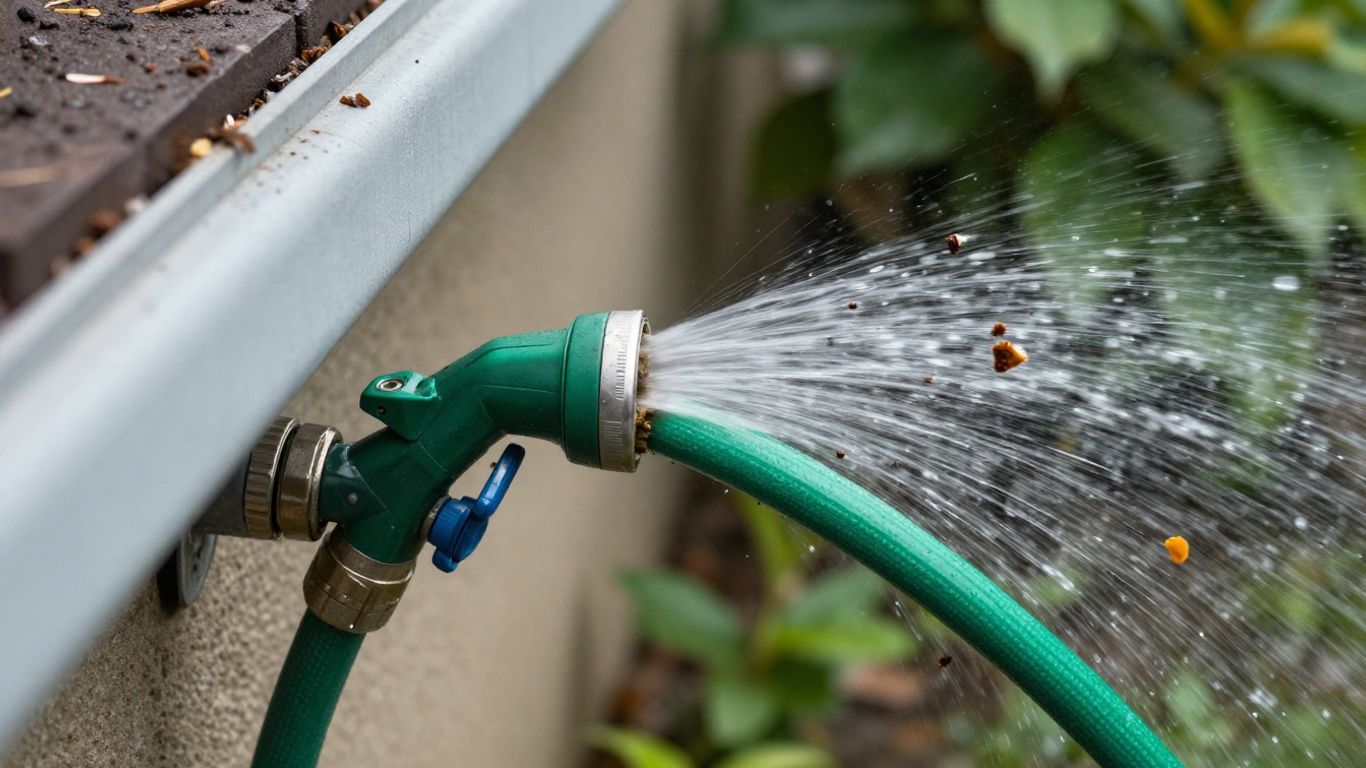
Targeted water pressure is excellent for finishing the job once the bulk of the clog has been loosened. A garden hose with a jet nozzle can effectively force out smaller remnants, ensuring the path is clear for future rainfall. This process is key to preventing the kind of water buildup that often prompts homeowners to call Water Damage Repair USA for restoration help.
Troubleshooting persistent drainage issues
If you have cleared the physical debris but water still won't drain, you likely have a mechanical problem with the gutter slope or a collapsed pipe. Inspect the pitch of your gutters to ensure they tilt slightly toward the downspout, as a flat or reverse-tilted system can never drain effectively regardless of cleanliness.
Checking for structural gutter damage
Regular inspections allow you to catch issues before they turn into major repair bills. By checking the integrity of your hangers and seals, you can extend the life of your entire exterior system by several years.
Detecting loose spikes and brackets
Walk beneath the gutter line while it is raining, if safe, to look for visible movement or separation from the fascia board. Loose brackets allow for sagging that holds stagnant water, which invites pests and eventual weight-induced collapse of the entire channel.
Locating leaks at the seams
Seams are the most common areas for small cracks to develop as the metal expands and contracts across different seasons. Drying the gutter and testing it with a bucket of water can reveal slow drips that you might otherwise miss, which can be sealed with a dedicated exterior-grade gutter sealant.
Identifying signs of gutter sagging or pitch issues
If water pools in the center of the gutter instead of flowing toward the end, you have a pitch issue that needs immediate correction. Re-adjusting the hangers allows you to restore the correct downward slope, ensuring your system functions exactly as designed to move water away from the roof.
Determining when to replace gutter components
If your gutters are riddled with rust, extensive cracking, or severe structural warping, minor repairs may no longer suffice. At this stage, professional replacement is often the most cost-effective option to ensure your home remains fully protected against heavy, incoming rainfall.
Essential maintenance tips for gutter longevity
Consistent care is not just about cleaning; it is about managing the entire drainage environment around your property. Taking a proactive stance prevents the gradual accumulation of dirt and damage that often necessitates expensive professional restoration later.
Establishing a seasonal cleaning schedule
Set firm calendar dates for your mid-spring and late-autumn cleaning sessions. Having a predictable routine ensures that you do not forget this critical home chore, keeping your drainage system in prime, ready-to-work condition year-round.
Installing gutter guards to reduce debris buildup
If you have trees near your roofline, guards are an excellent way to keep large debris out of the channels while allowing water to pass through. While they do not make the system completely maintenance-free, they certainly reduce the frequency of manual cleanings.
Managing overhanging tree branches
Trim back any tree limbs that hang directly over or within a few feet of your roof. Reduced contact limits the volume of leaves and twigs that fall into your gutters in the first place, saving you hours of labor.
Documenting system maintenance for insurance purposes
Keep receipts for materials or photos of your cleaned gutters, as these documentations can be valuable if you ever need to file an insurance claim after a major weather event. Proving you were diligent about maintenance can occasionally expedite the claim processing for unexpected exterior water issues.
Conclusion
Learning how to clean gutters safely is a vital responsibility for every homeowner, providing a simple yet powerful barrier against damaging water intrusion. With the right tools and a commitment to ladder safety, you can preserve your home’s structural integrity and avoid those stressful, costly emergency repairs by catching small issues before they snowball.
Frequently Asked Questions
How do I know if my gutters are clogged?
Visible overflow during light rain is the most obvious sign, but you can also look for plants growing in your gutters or water stains on the siding below the roofline.
Is it safer to clean gutters from the roof or a ladder?
Most safety experts recommend cleaning from a ladder, as walking on a roof introduces a high risk of falling and can cause damage to roofing shingles if they are older.
Can I use a pressure washer to clean my gutters?
While a pressure washer can work, it is often too powerful and can easily damage the gutter material or blow debris onto your siding; a standard garden hose with a spray nozzle is usually sufficient.
What do I do if my gutters are sagging?
If your gutters are sagging, the hangers might be lose or broken; try tightening the existing fasteners or installing additional brackets to restore the proper angle toward the downspout.
How often should I check my downspouts?
It is best to check your downspouts at least twice a year during your routine gutter cleanings, ensuring there are no bottom-up clogs that could trap water in the system.
Why are my gutters spilling over in only one spot?
Spilling in one specific area often indicates a local clog or a section of the gutter that has lost its pitch, which is creating a low point where water is pooling.
Should I hire a professional for gutter cleaning?
You should consider hiring a professional if your home is more than two stories tall, if you feel unsafe on a ladder, or if you have detected complex physical damage that requires specific repair expertise.