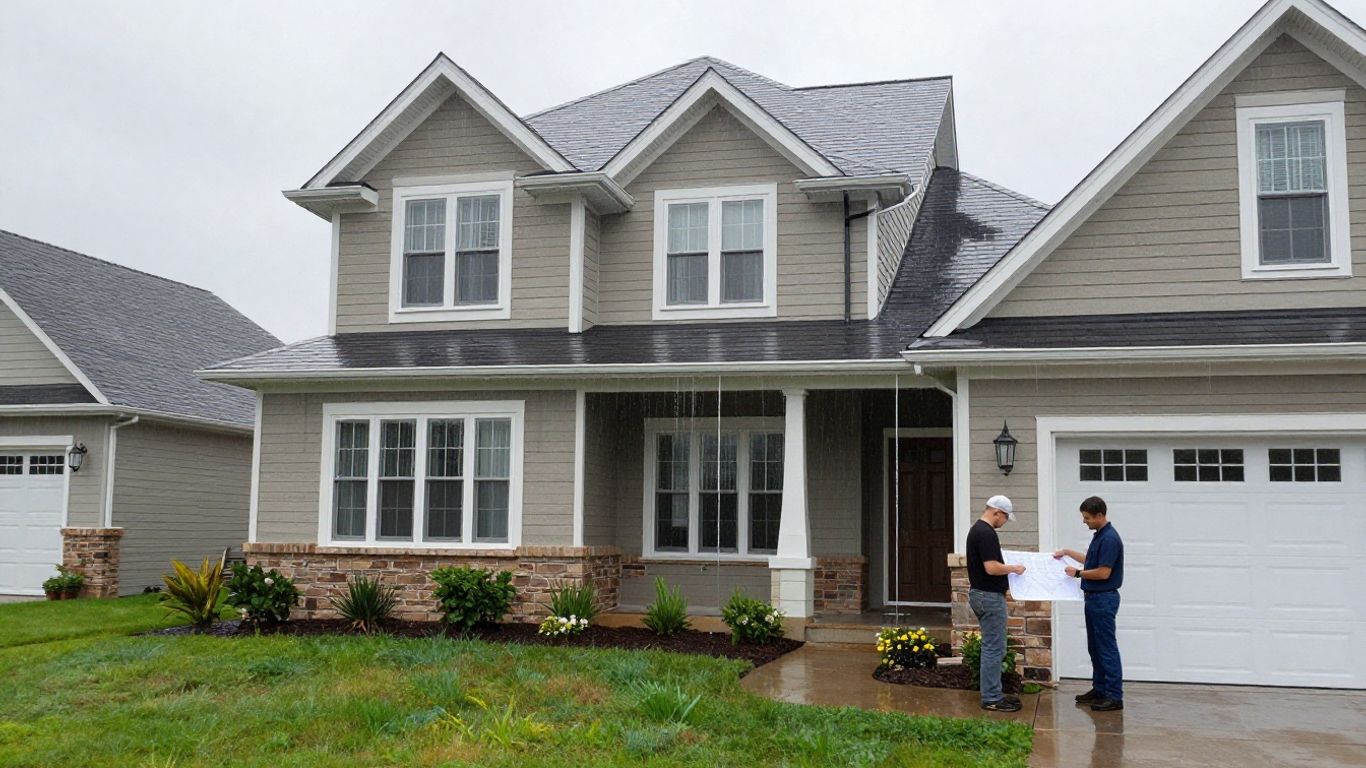
Key Takeaways
A lasting gutter system depends as much on careful planning and drainage design as on the gutter material itself. The right seamless gutter installation contractors will explain those decisions clearly and document the work.
- Seamless gutters reduce mid-run joints by being roll-formed in continuous lengths on site.
- Material, profile, gutter size, and downspout placement should suit the home and local weather.
- A written estimate should separate linear footage, access, removal, drainage, and material costs.
- Good contractors inspect fascia, test water flow, and explain workmanship and material warranties.
- Repair may make more sense than replacement when the existing system is sound and damage is limited.
Understand what seamless gutter installation involves
Seamless gutter installation is more than attaching a long metal channel beneath the roof edge. The contractor must measure the roofline, plan the direction of flow, assess the fascia, choose suitable outlets and downspouts, and account for the way rain reaches the property. A well-designed system should move water away from siding, doors, landscaping, and the foundation without drawing attention to itself.
For homeowners comparing seamless gutter installation contractors, the most useful early conversation is practical: What is failing now, what does the roof need, and where will the water go after it leaves the gutter? Those answers usually reveal whether a proposal is thoughtful or simply a material-and-labor price.
How seamless gutters differ from sectional systems
Sectional gutters arrive in shorter lengths and are joined together along the roofline. Each mid-run connection is another place where movement, sealant failure, debris, or poor alignment can eventually create a leak. Seamless gutters are roll-formed on site in continuous runs with no mid-run joints, although corners, end caps, outlets, and downspouts still require carefully made connections.
That distinction does not make a system maintenance-free, and it does not correct poor slope or weak fastening. It does reduce the number of joints across a straight run, which is one reason custom-fabricated seamless gutters are often selected for replacement projects.
Why on-site fabrication matters
On-site fabrication allows a contractor to form gutter runs to the measured dimensions of the house rather than relying on a collection of standard pieces. The crew can account for roofline breaks, corners, fascia conditions, and the desired locations of outlets while the work is being planned. It also gives the homeowner a chance to discuss profile, color, and downspout placement before the metal is cut.
Ask how measurements are taken and whether the quote identifies each run, outlet, end cap, and downspout. OnScene Gutters connects property owners with local contractors specializing in custom-fit, leak-resistant seamless gutter services, so a consultation can be a useful starting point when on-site fabrication is part of the plan.
How gutter size and profile affect performance
Gutter size should reflect the roof area feeding each run, the pitch of the roof, the number of valleys, and the intensity of local rainfall. A broad roof with concentrated valley flow may need more capacity than a small roof with evenly distributed runoff. The profile also affects appearance and how much water the channel can reasonably carry.
K-style gutters, with their decorative ogee front, are common on residential homes and can suit contemporary or traditional exteriors. Half-round gutters have a curved interior and a more traditional appearance. Neither profile is automatically right for every property; the contractor should explain the selected size and how it works with the roof’s water flow.
When new gutters should include downspout upgrades
Replacing the gutter channel without reviewing the downspouts can leave the main drainage problem untouched. Downspouts may be too few, too narrow, poorly positioned, or discharging directly beside the foundation. A new installation is a sensible time to add outlets, alter downspout locations, repair damaged sections, or install extensions that carry water farther away.
The contractor should describe the complete route from roof to discharge point, not just the visible gutter at the eave. If water pools near the house after rain, include that observation in the consultation and ask whether surface grading or underground drainage also needs attention.
Compare gutter materials and design options
Material selection affects price, weight, appearance, maintenance, and expected service life. Aluminum is widely chosen for residential work because it is light and available in many finishes, while copper and steel offer different visual and performance characteristics. The best choice depends on the building, budget, climate, and the owner’s willingness to maintain the finish.
Design decisions should be made as a system. A new gutter color may need to coordinate with fascia and trim, while guards, outlets, downspouts, and extensions must still support reliable water management. OnScene Gutters describes access to contractors offering seamless gutter solutions in aluminum and copper, including custom-fit installation for Los Angeles properties.
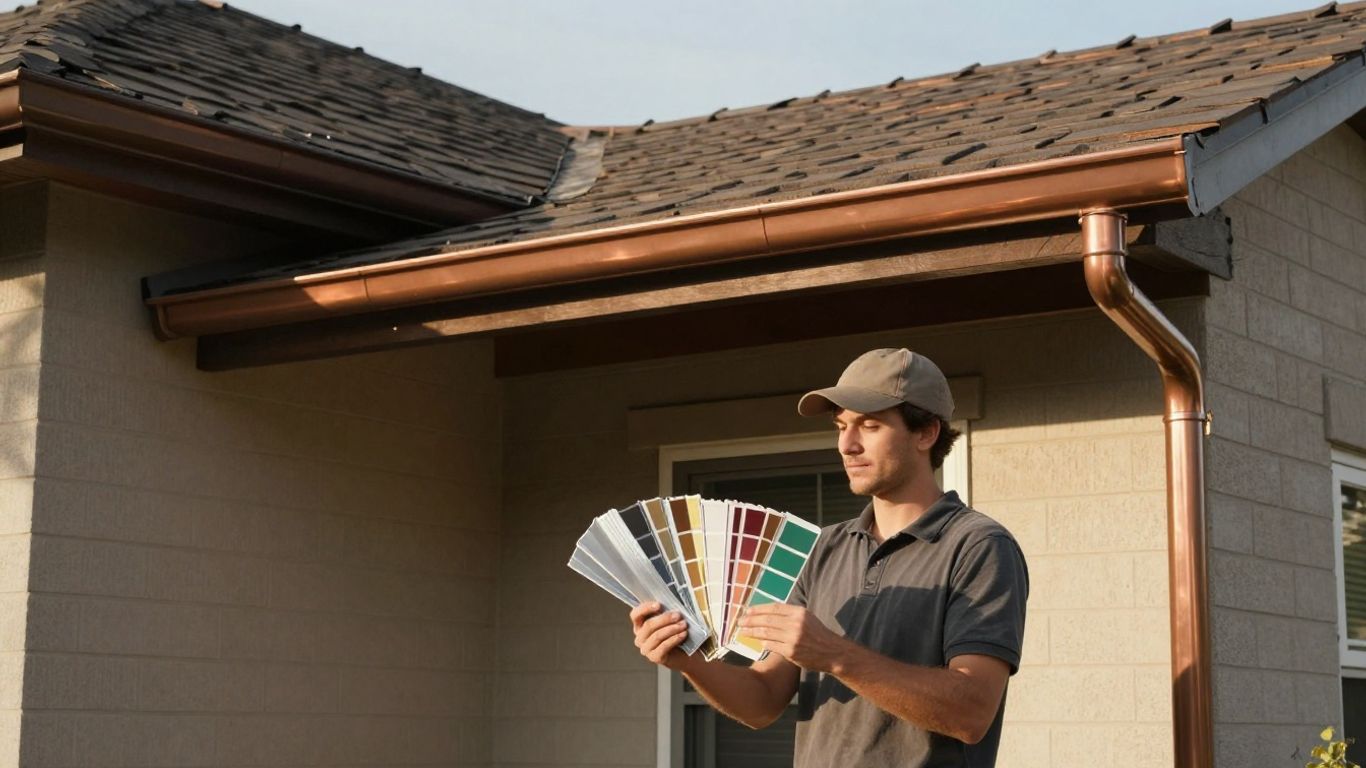
Aluminum gutters for affordability and versatility
Aluminum is a common residential option because it is relatively light, practical to form, and available in a broad range of colors. It can work well when the homeowner wants a clean appearance without the higher material cost associated with copper. Its suitability still depends on proper fastening, local weather, roof configuration, and protection from impact.
Ask whether the proposed gauge, profile, and size are appropriate for the building. A low material price does not compensate for inadequate supports or a design that cannot handle the roof’s runoff. The estimate should identify the finish and whether matching downspouts and accessories are included.
Copper and steel gutters for durability and appearance
Copper is often selected for its distinctive appearance and the way its finish changes over time. It can complement historic homes, masonry, and carefully detailed exterior renovations, but the material and installation are usually more expensive. Steel offers strength and a different visual character, though the finish and local exposure should be discussed because corrosion resistance matters.
Material compatibility deserves attention as well. Fasteners, flashing, sealants, and adjacent metals should be suitable for the selected gutter material. A contractor who explains those details is more useful than one who simply presents a sample board and a total price.
K-style and half-round gutter profiles
Profile changes the character of the roof edge. K-style gutters have a shaped front face that can blend with common residential trim, while half-round gutters create a curved, traditional line and may suit older or historically styled properties. The profile should also work with the roof edge, hangers, outlets, and downspout shape.
Before approving a design, look at a physical sample or photographs of completed work using the same profile. Confirm how the corners will be made and whether the chosen hangers remain concealed or visible. Small details are particularly noticeable on a front elevation.
Choosing colors, finishes, and compatible accessories
A color that matches the fascia can make the gutter recede, while a contrasting finish can deliberately outline the roofline. Compare samples outdoors if possible, since sunlight changes how painted metal appears. Also check that end caps, elbows, downspouts, extensions, and guards are available in compatible finishes.
Accessories should solve a defined problem rather than appear as automatic add-ons. Guards may reduce debris entering the channel, but they still require inspection and occasional maintenance. Downspout extensions, splash blocks, or underground drainage may matter more than an accessory chosen for appearance alone.
Evaluate seamless gutter installation contractors
Choosing among seamless gutter installation contractors calls for more than comparing online star ratings. You are hiring a crew to work at roof height, alter water flow, and attach a system to parts of the building that may already be weathered. The contractor should be able to explain the proposed design in plain language and provide a written scope.
A useful evaluation combines paperwork, field experience, references, and the quality of the estimate. Look for a clear description of materials, dimensions, drainage outlets, removal work, access conditions, payment terms, and warranty coverage. Vague proposals are difficult to compare and even harder to resolve if the work falls short.
Verify licensing, insurance, and local experience
Ask for the contractor’s license information where licensing applies, along with proof of general liability and workers’ compensation coverage. Verify the documents independently rather than assuming a logo or vehicle sign is sufficient. Local experience also matters because rainfall, snow, wind, building styles, and permit expectations vary by region.
A contractor should be comfortable discussing homes similar to yours, including their roof pitch, height, fascia construction, and drainage constraints. For a national service brand, OnScene Gutters connects homeowners with local contractors for custom-fit seamless gutter installation and related services, making local verification an important part of the homeowner’s own due diligence.
Review project photos, references, and customer feedback
Project photos can reveal whether the crew makes clean corners, keeps downspouts orderly, and works carefully around trim. Ask for examples resembling your home rather than accepting only polished close-ups. References are most useful when you ask specific questions about communication, cleanup, water flow, and how the contractor handled an unexpected fascia problem.
Read feedback for patterns, not isolated praise or criticism. Repeated comments about missed appointments, unexplained charges, leaks after rain, or difficulty obtaining warranty service deserve attention. Conversely, detailed comments about the process and follow-up offer more insight than a short rating alone.
Check workmanship and material warranties
A workmanship warranty covers the installation itself, while a material warranty comes from the manufacturer or material supplier. Ask what each warranty includes, how long it lasts, who handles a claim, and whether it transfers if the home is sold. Get the terms in writing before signing.
Pay attention to exclusions. A warranty may not cover damage from falling branches, ice, structural movement, or changes made by another contractor. Clear terms are not a negative; they help everyone understand which maintenance and repair responsibilities remain with the property owner.
Confirm experience with fascia, soffit, and drainage issues
Gutters attach to the fascia, so rotten or loose wood can undermine an otherwise attractive installation. The soffit, drip edge, roof edge, and siding may also affect how the new system should be fitted. Ask whether the crew inspects these areas before installation and how concealed damage is handled if it appears after removal.
Drainage should receive the same attention. A contractor may coordinate fascia and soffit repair, gutter replacement, downspout installation, and extensions, but the proposal should say what is included and what requires another trade. Clear scope prevents surprises when old gutters come down.
Get an accurate gutter installation cost estimate
A gutter installation price cannot be judged from house size alone. Linear footage, material, profile, roof height, access, corners, downspouts, removal, fascia repairs, and local labor rates all affect the final amount. An on-site measurement is the most reliable way to turn a rough budget into a useful estimate.
Request at least two detailed proposals, but compare scope rather than totals. One contractor may include removal and extensions while another lists only new gutter runs. A lower number may simply leave important drainage or preparation work outside the quote.
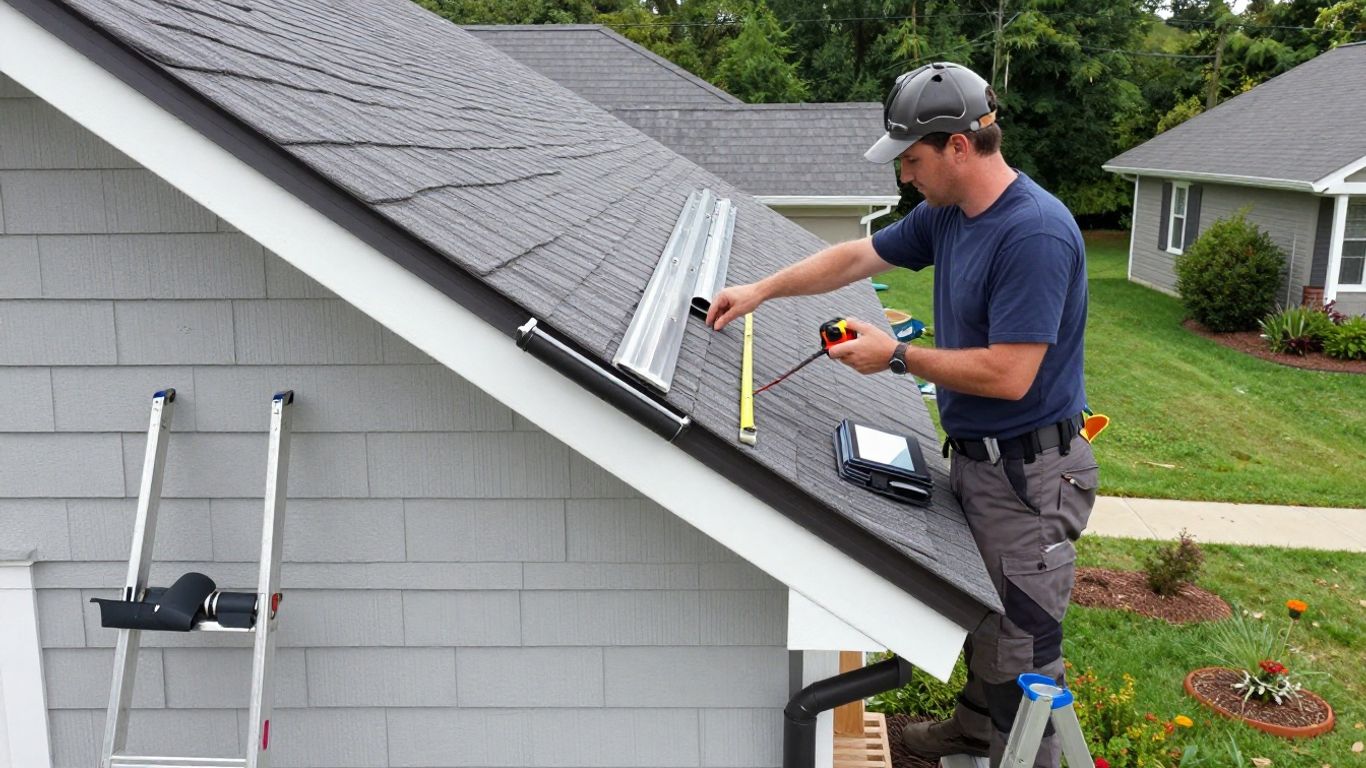
How linear footage affects the price
Longer rooflines require more gutter material, hangers, labor, and often more outlets and downspouts. Complex layouts also create more corners and transitions than a simple rectangular ranch, even when the total footage is similar. Ask the contractor to show the measured footage by elevation or run.
The estimate should distinguish straight runs from accessories and special details. This makes it easier to understand a change order if an additional section is discovered or if you decide to alter the drainage plan. It also prevents a single unexplained unit price from hiding the real scope.
The impact of home height, roof design, and access
Two-story work generally requires more setup and safety equipment than a single-story installation. Steep roofs, tight side yards, landscaping, fences, decks, and difficult parking can slow the crew or require different access equipment. Multiple roof levels and valleys add measuring and fitting time as well.
Tell each bidder about known access restrictions before the site visit. A transparent estimate should identify unusual access costs rather than adding them after work begins. If a lift or extended setup is needed, ask whether it is included in the quoted price.
Comparing aluminum, steel, and copper costs
Aluminum is commonly the budget-friendly choice for seamless residential gutters, while copper typically sits at the premium end. Steel pricing varies with the product, finish, gauge, and local availability. Installation complexity can narrow or widen those differences, so material cost alone is not a complete comparison.
| Material | Typical appeal | Cost position | Questions to ask |
|---|---|---|---|
| Aluminum | Light weight and color variety | Budget to mid-range | What gauge and finish are proposed? |
| Steel | Strength and a solid appearance | Mid-range, varies by product | How will the finish handle local exposure? |
| Copper | Distinctive finish and architectural character | Premium | Which compatible fasteners and sealants will be used? |
Use the table as a conversation starter, not as a substitute for a site-specific quote. The right material must suit the roof, attachment points, climate, and appearance of the building.
Identifying permits, removal fees, and other additional charges
Some locations require permits for exterior work, while others do not; requirements can also vary for historic districts, commercial buildings, or major alterations. Ask who will obtain any required permit and whether the fee is included. The same applies to old-gutter removal, disposal, fascia repair, painting, lift rental, and drainage extensions.
Before signing, ask the contractor to list conditions that could create a change order. Hidden rot is a legitimate possibility, but it should be documented with photographs and priced for approval. A written process for changes protects the homeowner and keeps the project moving.
Review the installation process and project timeline
A straightforward installation may take only part of a day, while a larger or more complicated property can require additional time. Weather, material availability, fascia repairs, permits, and access can shift the schedule. A reliable contractor will explain the sequence rather than promise an unrealistically exact finish date.
The process should move from measurement and drainage planning to preparation, fabrication, installation, and testing. Homeowners can help by clearing access areas, securing pets, and identifying any previous leak or overflow locations before the crew arrives.
Measuring the roofline and planning water flow
The first stage is a careful measurement of roof edges, corners, valleys, and discharge points. The contractor should note where water currently collects and how each downspout can release it safely. Roof pitch and contributing roof area help determine the channel size and outlet arrangement.
Ask to review the plan before fabrication begins. It should show the direction of slope, downspout locations, extensions, and any areas where water will connect to existing drainage. A few minutes spent on this drawing can prevent an inconvenient discharge point later.
Removing old gutters and inspecting the fascia
Old gutters should be removed without unnecessary damage to the fascia, siding, roof edge, or landscaping. Once the channel is down, the crew can inspect the attachment surface for rot, splitting, loose boards, or signs of long-term overflow. Those conditions should be photographed and discussed before new gutters are secured.
Do not treat fascia repair as a minor cosmetic detail. If the supporting wood cannot hold the hangers, the new system may sag or pull away. Confirm whether repair is included, excluded, or assigned to another contractor, and allow time for that work if needed.
Forming, fitting, and securing seamless gutter runs
The crew forms continuous runs to the measured lengths, then fits corners, end caps, outlets, and downspouts to the roofline. Fasteners should be placed at appropriate intervals and driven into sound material, with attention to the fascia angle and roof edge. Long runs need a deliberate slope toward their outlets rather than a visibly level appearance.
The finished work should look consistent from the ground. Check that corners are neat, downspouts are straight, elbows are supported, and the gutter does not press awkwardly against the roof or siding. Good installation is both functional and visually quiet.
Testing slopes, seams, outlets, and downspouts
Before the crew leaves, ask how the system will be tested. Water should travel toward the outlets without standing in the channel, escaping behind the gutter, or spilling over the front edge. Corners, end caps, outlets, and downspout connections deserve close inspection because they remain jointed even in a seamless system.
A final walkthrough should cover cleanup, extension discharge points, guard access, and maintenance expectations. If rain is not available for a natural test, the contractor can use controlled water to check representative areas and explain what was observed.
Plan drainage for your home and local climate
Gutters are only one part of water management. The system must collect runoff, carry it through downspouts, and release it where it will not erode soil or saturate the foundation. Local rainfall patterns, snow and ice, wind, trees, and soil conditions all affect the plan.
Climate should shape the conversation from the first estimate. A home in a region with intense downpours may need a different outlet arrangement than one dealing mainly with leaf fall, while cold climates require attention to ice and snow loads. The goal is controlled discharge, not simply a full-looking gutter channel.
Calculating the right number of downspouts
There is no single downspout count that fits every house. Contractors consider the roof area feeding each run, gutter size, slope, valley concentration, rainfall intensity, and the available discharge locations. Adding an outlet can sometimes improve performance more effectively than installing a larger channel everywhere.
Ask the contractor to explain why each downspout is located where it is. A balanced plan avoids forcing one outlet to handle too much roof area and can make extensions or underground drainage easier to route. It should also account for doors, walkways, driveways, and neighboring property lines.
Extending downspouts away from the foundation
A downspout that ends beside the foundation can put collected roof water right where it causes the most trouble. Extensions, splash blocks, swales, or underground drainage can move the discharge to a safer point, provided the route remains clear and does not direct water toward a neighbor or public walkway.
Walk the proposed discharge route with the contractor. Look for low spots, basement windows, retaining walls, and areas where runoff already gathers. A modest extension may solve the issue on one property, while another may need a more deliberate grading or drainage solution.
Preparing for heavy rain, snow, ice, or hurricanes
Weather preparation starts with sound attachment and adequate capacity. In heavy-rain areas, inspect valleys, outlets, and downspouts before the wet season. In snow and ice regions, discuss snow shedding, ice dams, and the way guards or roof design may affect accumulation. Coastal and hurricane-prone properties need careful attention to fastening and storm inspection after severe weather.
A seasonal check can be simple but should be consistent:
- Clear debris from channels and outlets before peak rainfall or leaf fall.
- Look for sagging, pulled fasteners, open end caps, and separated downspout joints.
- Confirm that extensions remain connected and discharge away from the foundation.
- Inspect for storm damage from the ground before climbing or calling for repairs.
These checks do not replace professional work at height, but they help identify problems early. For storm-damaged or detached sections, OnScene Gutters connects homeowners with local professionals for gutter repair and storm-related service.
Coordinating gutter guards with the drainage system
Gutter guards can reduce the amount of debris entering a channel, but they do not make a system maintenance-free. The guard must fit the gutter profile, leave outlets accessible, and work with the roof edge and downspout design. Some debris can still collect on top, and heavy rain may expose a poorly matched product.
Discuss guard maintenance before installation. Ask how the guards will be removed for inspection, how valleys and corners will be treated, and whether the warranty covers both the guard and the underlying gutter work. The best accessory is one that supports the whole drainage plan rather than creating a new obstruction.
Avoid common gutter installation problems
Many gutter failures begin with decisions made before the first piece is installed. An undersized channel, insufficient slope, weak fastening, or discharge point beside the foundation can create recurring trouble even when the metal itself is new. Early warning signs are often visible from the ground after a rainstorm.
When comparing contractors, listen for how they handle limitations. No gutter can overcome a damaged roof edge or a blocked underground drain without additional work. A candid explanation of what the system can and cannot solve is more valuable than a promise that every water problem will disappear.
Warning signs of poor slope and inadequate fastening
Water that remains in the channel after a storm may indicate insufficient slope, a sagging run, or a blocked outlet. Gutters pulling away from the fascia, wavering along the roofline, or showing frequent fastener holes may point to weak attachment or deteriorated supporting wood. Rust marks and staining beneath the front edge can also signal recurring overflow.
Ask the installer to check the entire run rather than tightening one visible screw. The solution could involve replacing fascia, resetting hangers, changing the slope, adding an outlet, or clearing a downstream blockage. Treating only the symptom often leads to another service call.
Why undersized gutters overflow during heavy rain
A gutter can overflow because its channel is too small for the roof area, because valley water is concentrated in one place, or because downspouts cannot release the flow quickly enough. Leaves and small obstructions make the problem worse. Splashing at corners may also reveal that the water is entering at a higher speed than the layout can handle.
The contractor should evaluate the roof section feeding the affected run, not simply replace the overflowing piece with the same size. Larger gutters, additional outlets, better positioning, or a change in the roof-to-gutter transition may be appropriate depending on the cause.
Preventing leaks at corners, outlets, and end caps
Straight seamless runs have no mid-run joints, but corners and terminations still need careful fitting and sealing. Leaks may appear where two directions meet, around an outlet cutout, beneath an end cap, or behind the gutter where the drip edge and fascia meet. Sealant alone is not a substitute for a correctly formed connection.
During the final inspection, look for clean overlaps, secure end caps, supported downspouts, and signs that water will enter the channel rather than run behind it. Photograph completed connections for your records, especially where they are difficult to see from the ground later.
When repairs are better than complete replacement
Replacement is not always the most sensible answer. If the existing gutters are correctly sized, securely attached, and sound apart from a small leak or damaged elbow, targeted repair may preserve a workable system at lower cost. Cleaning and a drainage adjustment may also resolve overflow caused by debris rather than failed material.
Replacement becomes more reasonable when problems are widespread, the metal is badly corroded or split, the fascia cannot support repeated repairs, or the layout is fundamentally wrong. Ask for a repair option and a replacement option when both are technically feasible. OnScene Gutters offers access to contractors for gutter repair, replacement, and seamless installation, so the recommendation can be matched to the condition of the property.
Conclusion
The best seamless gutter installation contractors do more than provide a continuous length of metal. They measure carefully, match the system to the roof and climate, inspect the attachment surface, plan the full drainage route, and explain costs and warranties before work begins. Compare complete scopes rather than isolated prices, and choose the proposal that makes water flow—and responsibility—clear.
Frequently Asked Questions
Are seamless gutters better than sectional gutters?
Seamless gutters have no mid-run joints, which can reduce the number of potential leak points along straight sections. They still have joints at corners, end caps, outlets, and downspouts, so installation quality and maintenance remain important.
What size gutters do I need?
The appropriate size depends on roof area, pitch, valleys, rainfall intensity, gutter slope, and downspout capacity. A contractor should measure the roof and explain why the proposed size suits each drainage run.
How much does seamless gutter installation cost?
Cost depends on material, linear footage, home height, roof complexity, access, removal, drainage changes, and local labor rates. An on-site measurement and detailed written scope provide the most accurate estimate.
How many downspouts does a house need?
The number varies with roof area, gutter size, slope, rainfall, and the location of safe discharge points. A contractor should calculate the load on each run rather than apply one fixed number to every home.
Are gutter guards maintenance-free?
No guard eliminates maintenance entirely. Quality guards can reduce cleaning frequency, but they still need inspection, debris removal from the surface, and attention to corners, valleys, and outlets.
How far should downspouts extend from the house?
They should discharge far enough away to prevent water from collecting beside the foundation, while also respecting grading, walkways, property lines, and local drainage conditions. The required distance varies by site.
When should gutters be replaced instead of repaired?
Replacement is more likely to make sense when damage is widespread, the metal is failing, the system is poorly sized, or the fascia cannot support it. Limited leaks, loose elbows, or isolated damage may be suitable for repair after inspection.