Key Takeaways
A small gutter defect can become a roof, siding, fascia, or foundation problem when Chicago weather puts the system under stress. A timely inspection helps separate a simple repair from damage that calls for replacement.
- Look for leaks, overflow, sagging, and sections pulling away from the roofline.
- Heavy rain, wind, snow, ice, clogs, and freeze-thaw cycles all affect Chicago gutters.
- The right repair depends on the damaged part, gutter material, age, and condition of the fascia.
- A professional assessment should cover pitch, hangers, downspouts, roof height, and cleanup.
- Spring and fall maintenance can reduce recurring clogs and water damage.
Identify the gutter problem before it causes more damage
Gutter problems are often visible before they become expensive. Water stains, damp siding, or a sudden stream near the foundation can point to a failure above. From the ground, homeowners can gather useful clues, but ladders and roofs introduce fall risks. If a section is hanging, twisted, or damaged after a storm, keep people away from the area until it has been assessed.
How to spot leaks, sagging, and detached sections
Walk around the home during or shortly after rain, if conditions are safe. A thin stream at a seam, corner, or end cap suggests a localized leak, while water spilling over the front edge may indicate a clog, poor pitch, or insufficient drainage. Gutters that dip between hangers hold standing water and may be carrying more weight than the fasteners can handle.
Detached sections usually leave a visible gap between the gutter and the fascia or roof edge. You may also see bent hangers, loose screws, or a downspout that no longer meets the outlet cleanly. Do not pull on a loose section to test it; even a short length of metal can fall unexpectedly.
Why gutters overflow during Chicago rainstorms
Overflow does not always mean the gutter is too small. Leaves, seed pods, and roof grit can block the channel or downspout, forcing water over the front. A gutter can also overflow when it slopes away from the outlet, when the roof sends water into one concentrated area, or when an elbow is blocked below the visible opening.
Observe where the water goes. Overflow at one short point suggests a local obstruction or pitch issue, while overflow along an entire run may indicate widespread clogging or a system that cannot manage the roof drainage. Chicago gutter repair can involve sealing leaks, repairing sagging sections, clearing clogs, and addressing downspout problems, so the cause matters more than the symptom alone.
Signs of damaged fascia, soffits, and roof edges
Gutters are attached to the building, so damage behind them can make an otherwise minor repair unstable. Look for peeling paint, soft-looking wood, dark streaks, staining under the eaves, or a roof edge that appears uneven. Moisture may also show up inside an attic or along an upper wall, although those signs can have several causes.
The soffit is the underside of the roof overhang, while the fascia is the vertical board commonly supporting the gutter. If either has rot or extensive water damage, new fasteners may not hold. A contractor may need to coordinate fascia or soffit repair before reattaching the gutter.
When a gutter issue becomes an emergency
Treat a gutter issue as urgent when storm damage leaves metal or brackets hanging over a walkway, when water is entering the home, or when runoff is collecting beside the foundation. A blocked downspout during a severe storm can also send a large volume of water against siding and masonry. Move patio furniture and other items away from falling sections, and avoid working near electrical equipment or unstable surfaces.
If the damage followed wind, hail, or a falling branch, photograph it from the ground when safe. A prompt inspection can document the condition and help prevent additional damage while the repair plan is being made.
Understand the most common causes of gutter damage in Chicago
Chicago gutters face repeated changes in weather rather than one single source of wear. Summer downpours test drainage, autumn debris fills channels, and winter brings snow, ice, and repeated freezing and thawing. Older fasteners and weakened fascia are especially vulnerable when a clogged gutter stays heavy for days. Understanding the cause helps a contractor fix the underlying problem instead of applying a temporary patch.
Effects of heavy rain, wind, snow, and ice
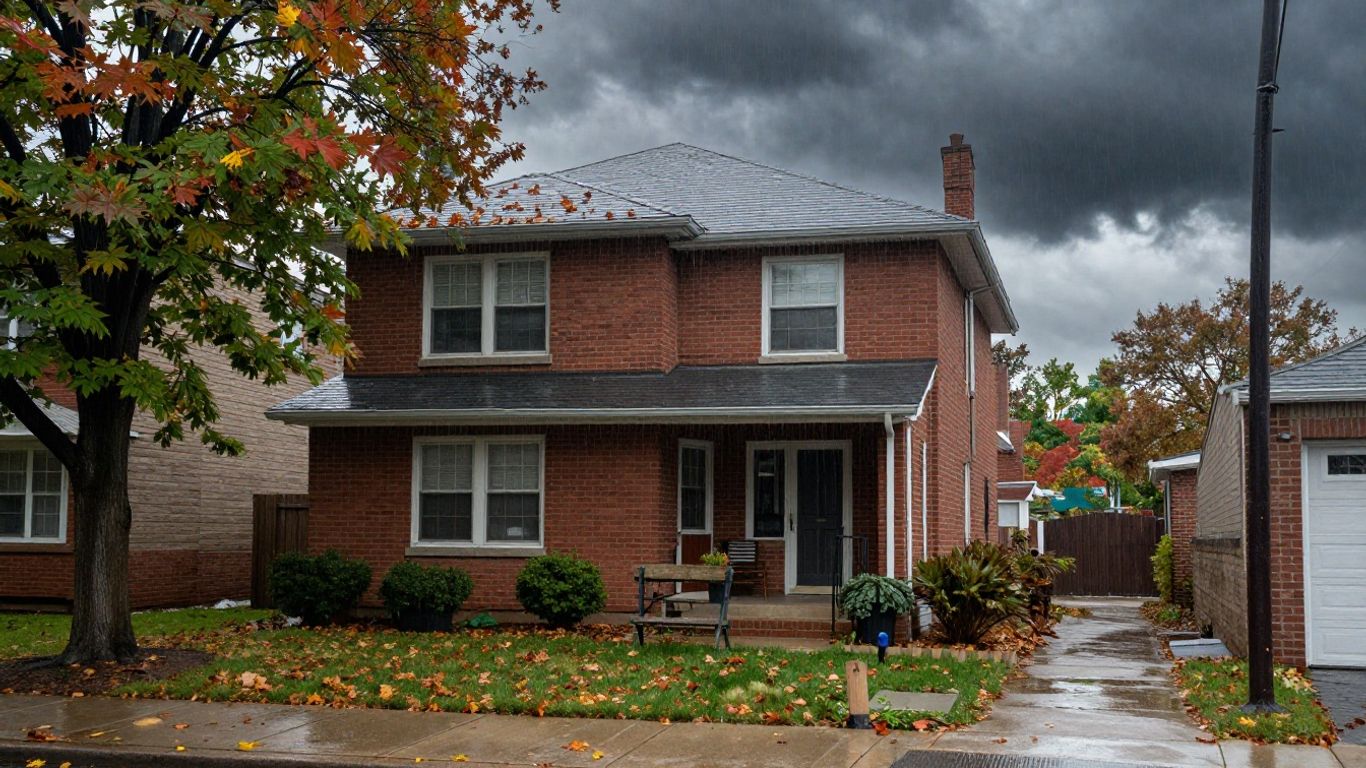
Heavy rain can expose a poor slope or a downspout that is too restricted for the roof area. Wind can lift loose sections, bend elbows, and drive branches against the gutter edge. Snow and ice add weight, while ice dams can hold meltwater near the roof edge and increase the chance of leaks behind the gutter.
A post-storm inspection should cover the full run, not only the place where water was first noticed. Hangers may loosen several feet away from the visible damage, and a shifted section can change the pitch of the adjoining gutter.
How clogged gutters create structural stress
Leaves and roof debris create a simple chain of problems. The material blocks water, retained water adds weight, and the added load pulls against hangers, screws, fascia, and joints. When the gutter finally spills, water can wet siding, stain trim, erode soil, or collect near the foundation.
The most useful repair is often a combination of debris removal and hardware correction. Clearing a channel without replacing a bent hanger leaves the original weakness in place. Conversely, installing new hardware while a downspout remains blocked can cause the same stress to return.
Why freeze-thaw cycles loosen gutters and fasteners
Water expands as it freezes in seams, elbows, and partially blocked downspouts. Thawing allows movement, then another freeze adds pressure. Over time, this cycle can open a small seam, enlarge a fastener hole, or pull a bracket away from softened fascia.
The pattern may be subtle. A gutter that looks straight in October can sag after winter, especially if it was already holding debris or had too few supports. A professional can check the attachment points and correct the pitch before the next major rain.
The impact of tree debris and seasonal buildup
Trees near the roofline can fill gutters quickly with leaves, twigs, buds, and fine organic material. Pine needles are particularly persistent because they can settle around outlets and form dense mats. Spring pollen and seed debris add another layer after winter has passed.
For many Chicago homes, a practical maintenance rhythm includes these steps:
- Clear the gutters in spring after winter debris has collected.
- Inspect outlets and downspouts before the heavier summer storms.
- Schedule a fall cleaning after most leaves have dropped.
- Add an extra inspection for homes beneath dense tree cover.
This sequence does not eliminate maintenance, but it catches the buildup when it is easiest to remove. A guard may reduce the amount of debris entering the channel, yet the roofline and guard still need periodic inspection.
Choose the right gutter repair for the damage
Gutter repair is not one universal treatment. A small seam leak needs a different response from a pulled-away run, and a loose bracket may be a symptom of damaged fascia rather than the main problem. The repair should restore water flow and attachment without hiding conditions that will cause another failure. That usually means cleaning and inspecting before sealing or replacing parts.
Sealing leaks at seams, corners, and end caps
Seams, inside corners, and end caps are common leak points because they join separate components. A contractor will normally remove debris and failing sealant, inspect the metal for movement or corrosion, and apply a compatible gutter sealant where the joint is sound. Patching over wet, dirty, or shifting material rarely lasts.
A leak behind the fascia deserves extra attention. Water that escapes at the back edge may be reaching the roof trim or wall cavity rather than simply dripping onto the ground. The repair may involve correcting the gutter position or checking the roof-edge flashing as well as sealing the joint.
Replacing damaged hangers, brackets, and fasteners
Hangers and brackets keep the gutter aligned and carry its load. Bent hardware, missing screws, and fasteners pulled out of the fascia can create a visible sag or an opening at the roofline. Replacement hardware should suit the gutter material and be installed into sound support.
The number and placement of supports matter, but the correct arrangement depends on the gutter profile, length, roof design, and local conditions. A repair that simply adds a screw beside a failed screw may not provide a durable attachment if the surrounding wood is soft.
Repairing sagging or improperly sloped gutters
A gutter needs a modest, consistent fall toward its outlet. Too little slope leaves water standing; too much slope can send water over the end before it reaches the downspout. Sagging usually reflects loose supports, debris weight, damaged fascia, or a combination of these issues.
The contractor may remove and realign part of the run, replace supports, and verify that water reaches the outlet. That is more reliable than forcing the front edge upward while leaving the back edge or attachment points out of alignment.
Reattaching sections pulled away from the roofline
A section pulled away after a storm should be checked for bent metal, torn-out fasteners, damaged fascia, and stress at the adjoining joints. If the section is still straight and the support is sound, reattachment may be practical. If the gutter has twisted or the board behind it has deteriorated, partial replacement or carpentry may be needed.
After the section is secured, the downspout connection and nearby roof edge should be tested during water flow. The goal is not merely to make the gutter look flush again, but to restore a continuous path from roof to downspout.
Know when repair is better than gutter replacement
Repair makes sense when the damage is limited and the rest of the system remains sound. Replacement becomes more reasonable when corrosion, deformation, failing joints, or weak attachment points appear across several runs. The decision should account for the gutter material, age, roof layout, fascia condition, and the cost of repeatedly correcting the same defects. A careful inspection is more useful than choosing based on one leak.
How age and widespread corrosion affect the decision
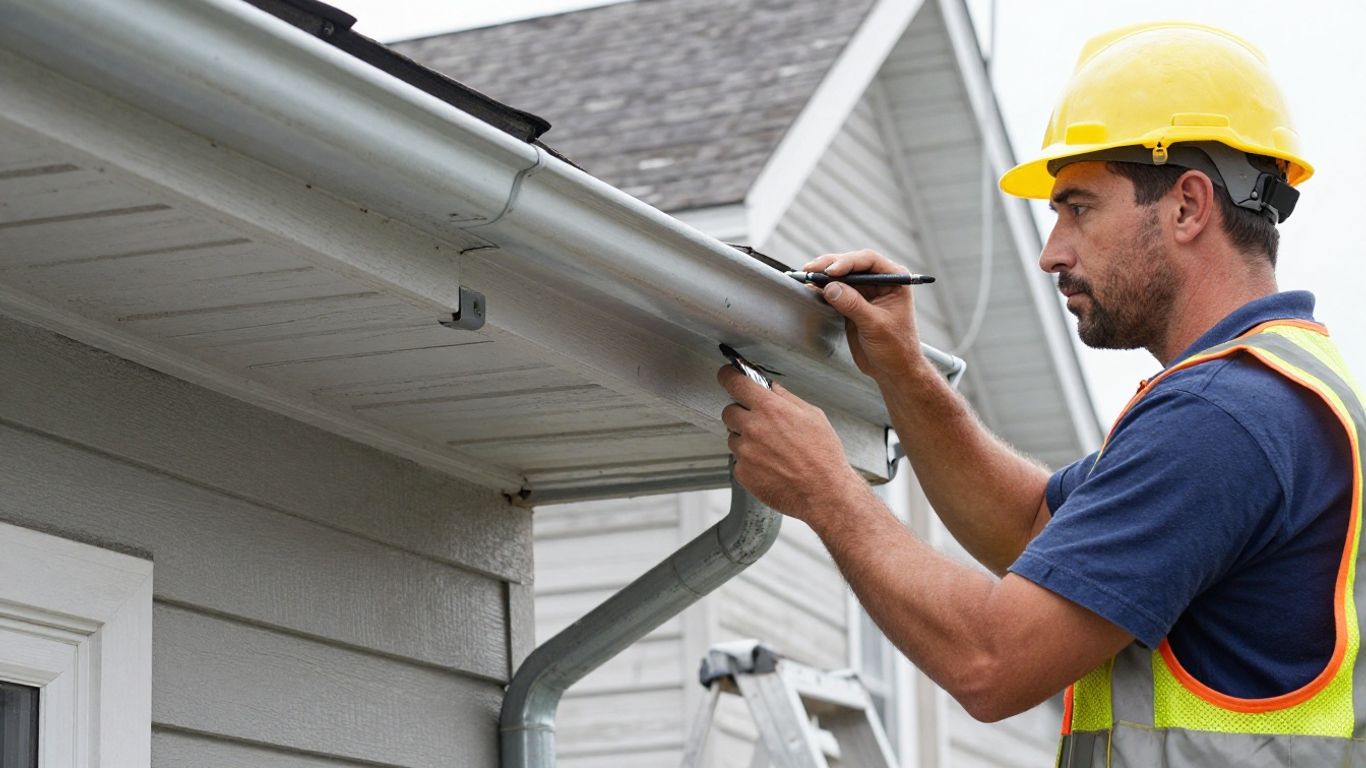
Surface discoloration is not automatically a reason to replace gutters. Deep rust, pinholes, splitting seams, or metal that flexes easily are more serious. If corrosion appears at many joints and along multiple runs, patching each spot may cost more over time and still leave the system vulnerable.
Age also matters because older gutters may have outdated hangers, mismatched repairs, or a profile that is difficult to integrate with newer parts. A contractor can explain whether a targeted repair will provide a reasonable service life or whether replacement offers a cleaner long-term solution.
Comparing sectional and seamless gutter repairs
Sectional gutters are joined along their length, so each joint is a potential maintenance point. A damaged section can often be removed and replaced without disturbing an entire run, though matching the profile and color may be difficult. Seamless gutters are formed in continuous runs with no mid-run joints, but damage to a long run may require replacing more of that run rather than swapping one short piece.
The comparison is easiest when viewed alongside the condition of the existing system:
| Condition | Repair may fit when | Replacement may fit when |
|---|---|---|
| One leaking joint | The surrounding metal is sound | Several joints are failing |
| Local sag | Supports and fascia are solid | The run is distorted or repeatedly sags |
| Storm impact | Damage is limited to one section | Multiple runs or outlets are bent |
| Corrosion | Rust is shallow and isolated | Pinholes and weak metal are widespread |
This framework is only a starting point. A seamless run can still need a localized repair around an outlet, while a sectional system may be a good candidate for replacement if repeated joint leaks have become the main maintenance burden.
Evaluating aluminum, steel, copper, and vinyl gutters
Aluminum is widely used because it is relatively light and available in many colors. Steel is stronger but can corrode if its protective finish is damaged. Copper has a distinctive appearance and a premium material cost. Vinyl will not rust, but it can become brittle or crack with age and temperature changes.
The best choice depends on the home, budget, appearance, roof drainage, and expected maintenance. Matching an existing system can be sensible for a small repair, while a replacement project creates an opportunity to reconsider capacity, downspout placement, and the condition of the roof edge.
When fascia or soffit repairs must come first
A gutter cannot be securely fastened to rotten or badly split fascia. Likewise, damage to the soffit or roof edge may indicate that water has been entering where it should not. In those cases, repairing the visible gutter first can leave the support problem unresolved.
The work may be coordinated so the damaged wood or trim is restored before the gutter is realigned. This adds a step, but it gives the new or repaired system a stable attachment and makes it easier to identify the true path of water.
Prepare for a professional gutter repair visit
A little preparation helps the inspection stay focused. You do not need to climb onto the roof or take the system apart. Instead, collect safe observations, note when the problem appears, and give the contractor access to the areas around the downspouts and foundation. Photos taken from the ground can be useful after a storm.
What homeowners can safely inspect from the ground
From a stable location, look for visible gaps, sagging runs, overflowing corners, detached downspouts, and stains beneath the eaves. Check whether water is pooling near the foundation or washing soil away from the downspout outlet. Binoculars can help with a high roofline, but they do not replace a professional inspection.
Do not stand beneath a hanging section, walk on a wet roof, or use a ladder during wind, rain, or icy conditions. If you see damaged electrical equipment, active structural movement, or water entering living space, step back and request qualified help.
Information to gather before requesting an estimate
Write down the approximate location of the problem and whether it occurs during light rain, heavy rain, snowmelt, or after a storm. Note any previous repairs, recent roof work, tree removal, or interior water stains. Pictures showing the full elevation are often more helpful than a close-up alone.
It also helps to know the home’s number of stories, the accessible areas around it, and whether the gutter system is aluminum, steel, copper, vinyl, sectional, or seamless. These details allow the contractor to plan the inspection without treating a complicated repair like a simple patch.
How contractors assess pitch, drainage, and roof height
An assessment typically follows the water path from the roof edge through the gutter and into the downspout. The contractor checks whether the gutter is aligned, whether outlets are open, whether downspouts discharge far enough from the foundation, and whether fasteners are holding in sound material. Roof height and access affect safety, equipment, and labor.
They may also inspect adjoining fascia, soffits, siding, and roof-edge components for signs of moisture. OnScene Gutters connects Chicago property owners with local professionals for seamless gutter installation, repair, replacement, and maintenance, including downspout and freeze-thaw-related drainage concerns documented for the service.
Questions to ask about materials, warranties, and cleanup
Ask what caused the failure, which parts will be repaired, and whether the estimate includes debris removal and disposal. Clarify whether replacement material will match the existing profile and color, or whether the contractor recommends changing the run. It is also reasonable to ask how the work will protect landscaping and siding during the visit.
Before approving the work, ask what warranty applies to labor and materials, what conditions are excluded, and whether fascia or soffit repairs are separate. For broader planning, a bathroom remodeling guide offers a useful reminder that access, material selection, water damage, and cleanup should be discussed before a home project begins—even though the repair itself is unrelated to gutters.
Prevent future gutter problems after the repair
A repair lasts longer when the water-management system is maintained as a whole. That includes the gutter channel, outlets, downspouts, extensions, roof edge, and the structure supporting the system. Chicago’s seasonal changes make a set-it-and-forget-it approach risky. A simple calendar is easier to follow than waiting for the next overflow.
How often Chicago homes should schedule gutter cleaning
Spring and fall cleaning is standard guidance for many homes, with additional service for properties beneath heavy tree cover. The timing should reflect what is actually falling onto the roof and how quickly the downspouts clog. Cleaning should include the outlets and downspouts, not just the visible trough.
If ladder work is unsafe or the home is two stories, use a professional rather than taking a chance. Chicago gutter cleaning guidance can help homeowners think through routine maintenance and the signs that a system needs attention between scheduled cleanings.
Whether gutter guards are suitable for local conditions
Gutter guards can reduce the amount of leaves and larger debris entering the channel, but they do not make a system maintenance-free. Fine material can collect on top or pass through, and the roof, edges, and downspouts still need inspection. Guard type should be matched to the roof, surrounding trees, gutter condition, and access needs.
A guard should not be installed over a gutter with poor pitch, loose supports, or damaged fascia. Correct those issues first so the added component does not conceal a drainage or attachment problem. OnScene Gutters provides access to contractors for custom-fit, leak-resistant seamless gutter installation; that documented service is distinct from assuming every existing gutter needs a guard.
Extending downspouts away from the foundation
A downspout should release water where it will not run directly back toward the foundation. Extensions, splash blocks, or other drainage solutions can help, but the right arrangement depends on grade, landscaping, paved surfaces, and local site conditions. Watch the outlet during rain to see whether water pools or flows back toward the house.
Keep extensions connected and clear of leaves. If an outlet repeatedly disconnects, the issue may be poor alignment, a damaged elbow, or movement caused by runoff. Fixing the connection is usually more useful than repeatedly repositioning the loose piece.
Seasonal maintenance before winter and spring storms
Before winter, clear debris, inspect seams and end caps, and make sure downspouts are open. Check for loose fasteners and small areas of corrosion before freezing weather makes access difficult. In spring, look for sagging caused by winter weight, displaced extensions, and soil erosion near discharge points.
For storm preparation and local water-management planning, Chicago storm gutter services can provide another perspective on repair, installation, replacement, guards, and maintenance. After a major storm, inspect from the ground and arrange professional help for anything loose, high, or structurally uncertain.
Conclusion
The best gutter repair Chicago homeowners can make is often the one that addresses the cause, not only the dripping spot. Inspect the full drainage path, protect yourself from ladder and storm hazards, and ask a contractor to assess the gutter, downspouts, pitch, fasteners, and supporting fascia together. With timely repairs and spring-and-fall maintenance, a sound system can move rainwater away from the roof, walls, landscaping, and foundation more reliably.
Frequently Asked Questions
How do I know whether my gutters need repair?
Visible leaks, sagging, overflow, loose sections, damaged downspouts, and water pooling near the foundation are common warning signs. A professional inspection can determine whether the problem is localized or part of wider system damage.
Can a small gutter leak wait until spring?
It depends on the location and weather. A small, isolated leak may not require emergency service, but leaks that wet the fascia, enter the home, or occur alongside a detached section should be assessed promptly.
Why do gutters overflow during heavy rain?
Common causes include clogged channels or downspouts, poor pitch, concentrated roof runoff, undersized drainage, and sections that have shifted. The point where water spills can help identify which cause is most likely.
Should I repair or replace old gutters?
Repair is usually more practical when the damage is limited and the metal and supports remain sound. Replacement deserves consideration when corrosion, distortion, failing joints, or weak attachment points are widespread.
How often should gutters be cleaned in Chicago?
Spring and fall are the usual starting points. Homes beneath dense tree cover may need additional cleanings or inspections, especially after heavy leaf fall and before major storms.
Are gutter guards maintenance-free?
No. Guards can reduce debris entering the gutter, but they still require inspection and occasional cleaning. They should be installed only after pitch, supports, downspouts, and fascia are in suitable condition.
How far should downspouts discharge from the house?
They should release water far enough away that it does not flow back toward the foundation. The appropriate extension depends on the property’s grade, soil, landscaping, and drainage layout, so a site assessment is useful when pooling continues.