
Key Takeaways
California homeowners should treat gutters as part of the home's water-management system, not just as trim along the roofline.
- Leaks, clogs, sagging, and detached sections can direct water toward fascia, siding, landscaping, and foundations.
- Small, localized damage may be repairable, while corrosion and repeated failures often justify replacement.
- Gutter material, profile, slope, size, and downspout capacity should match the roof and local weather.
- A complete estimate should address drainage paths, fascia or soffit damage, access, cleanup, and long-term maintenance.
- Licensed, insured professionals can make storm-related repairs safer and help prevent temporary fixes from becoming larger problems.
Understanding common gutter problems in California homes
California homes face long dry periods followed by intense seasonal rain, so gutters may sit unused and then need to handle a sudden volume of water. Dust, leaves, roof grit, and windblown debris can collect during the dry months. When the first major storm arrives, weak points become obvious quickly. A short inspection before the rainy season can reveal problems while they are still manageable.
How leaks, clogs, and sagging sections develop
Leaks commonly begin at seams, end caps, miters, or small punctures. Clogs form when leaves and roof debris block the channel or downspout, causing water to spill over the front edge. A gutter may sag when hangers loosen, the fascia softens, or standing water adds weight to an already weakened section. If water is leaking behind the gutter, the repair may involve more than sealant; the roof edge and fascia need to be checked as well.
Cleaning twice a year, usually in spring and fall, is a useful baseline, with more frequent attention for homes beneath heavy tree cover. Downspouts should also be tested rather than assumed to be open. A system that looks clean from the ground can still have a blockage at an elbow or underground connection.
Why wildfires, wind, and heavy rain can damage gutters
Wildfire conditions can leave ash, fine sediment, and small debris on roofs and in gutter channels. Heat and airborne embers may damage nearby components, while falling branches can bend or pull sections away from the roofline. Strong wind can loosen fasteners even when the gutter itself is not visibly cracked.
Heavy rain then exposes pitch and capacity problems. Water may overflow at valleys, back up at a blocked outlet, or rush past a short downspout extension. After a major storm or nearby fire, avoid climbing onto a damaged roofline yourself. A ground-level check followed by a professional inspection is a safer approach.
Signs that gutter problems are affecting the fascia or foundation
The clearest warning signs are often below the gutter rather than in it. Peeling paint, stained siding, soft wood, and visible gaps behind the gutter can indicate that water is reaching the fascia. Near the ground, look for mulch washing away, soil erosion, standing water, or damp areas beside the foundation. Cracks do not automatically prove a gutter caused them, but persistent discharge in the same location deserves attention.
For a local example of the issues a repair visit may address, homeowners can review Sacramento gutter repair for leak sealing, sagging sections, clogs, and downspout concerns. The practical lesson is the same anywhere in California: trace the water from the roof edge to its final discharge point instead of treating an overflow as an isolated nuisance.
Deciding between gutter repair and full replacement
The right choice depends on the extent of damage, the condition of the mounting surface, and how often the system has failed. A single leak in otherwise straight, secure guttering is a different project from a roofline with multiple separations and rusted fasteners. An inspection should distinguish cosmetic wear from a drainage failure. It should also identify whether the supporting fascia can hold new hangers.
When patching or resealing is a practical solution
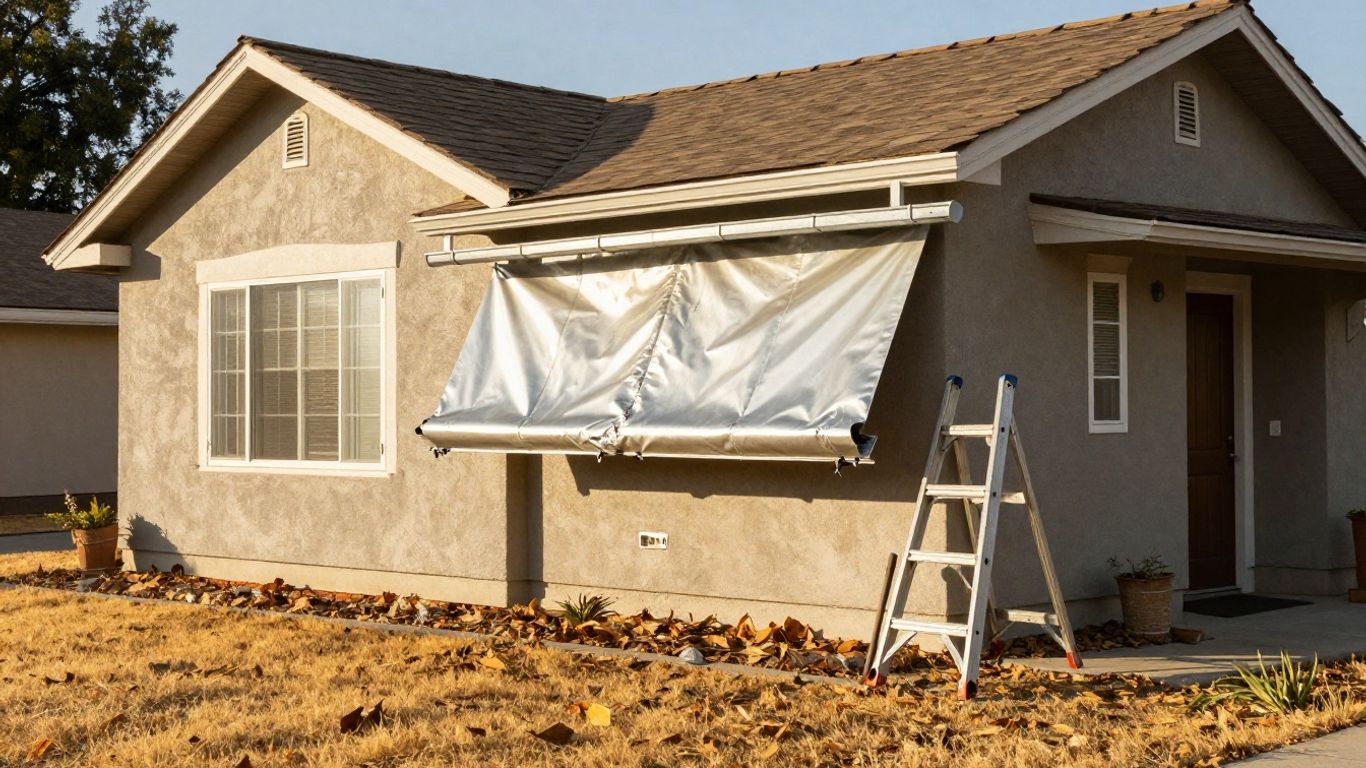
Repair is often reasonable when the damage is confined to one seam, end cap, small hole, loose hanger, or detached downspout. The professional may clean and dry the area, reseal a joint, replace a fastener, realign the section, or reconnect a downspout. The surrounding metal should still be sound, and the gutter should retain a usable slope toward its outlet.
A patch should not simply cover dirt, active corrosion, or a section that is pulling away from rotten wood. Ask what caused the failure and whether the proposed repair restores the water path. That answer helps separate a durable correction from a short-lived cosmetic fix.
When corrosion, separation, or repeated failures require replacement
Replacement becomes more sensible when rust or corrosion extends along multiple sections, seams keep opening, or the gutter has lost its shape. Repeated sagging may point to inadequate hangers, damaged fascia, or a system that is undersized for the roof. Sections bent by a fallen branch may also be difficult to realign without creating new low spots.
A replacement estimate should explain what will be removed and what will remain. If only one run is failing, a partial replacement may be possible, but mismatched profiles or aged adjoining sections can limit that option. The goal is a continuous, properly pitched path, not simply a newer piece beside an older problem.
How the age and material of your gutters affect the decision
Age alone does not determine the answer. Aluminum can remain serviceable for many years when it is well supported and free of widespread damage, while vinyl may become brittle or distorted with exposure. Steel can resist impact but may corrode when its protective finish fails. Copper has a long service life potential but carries a higher material cost and changes appearance over time.
Before choosing, compare the cost of the proposed repair with the condition of the remaining runs, hangers, outlets, and downspouts. A whole-system view is usually more useful than focusing on the cheapest immediate fix. If the roof is also being replaced, coordinating the projects can help ensure the drip edge and gutter placement work together.
Choosing the right gutter system for your property
A gutter system should suit the roof shape, rainfall pattern, building design, and maintenance habits. California properties range from compact bungalows to large, multilevel homes with complex valleys and long roof runs. The attractive option is not always the most practical one. Water volume and discharge location matter just as much as profile and finish.
Comparing seamless, sectional, and half-round gutters
Seamless gutters are formed in long, continuous runs, so they have fewer mid-run joints where leaks can begin. Sectional gutters arrive in shorter pieces and can be useful for smaller projects or limited repairs, but they contain more connections. Half-round gutters have a rounded interior profile and a distinctive appearance; their hangers and accessories must be compatible with that shape.
Seamless installation is often considered when a homeowner is replacing several connected runs. Sectional repairs can make sense when the existing profile is sound and the damaged area is genuinely localized. In either case, corners, outlets, end caps, and downspouts should be included in the design conversation.
Selecting aluminum, steel, copper, or vinyl for California conditions
Material affects weight, appearance, maintenance, cost, and how the system responds to impact and weather. Aluminum is widely used because it is light and available in many finishes. Steel may provide greater rigidity but requires attention to coating and corrosion. Copper offers a distinctive finish and premium appearance, while vinyl is light and generally easy to handle but can become brittle or deform.
The property setting matters too. A home beneath trees may need a maintenance plan that is more rigorous than a home with a clear roofline. In coastal areas, moisture and salt exposure deserve consideration, while inland properties may see more dust, heat, and wildfire debris. A contractor should explain how the selected material fits those conditions rather than recommending one option by habit.
Matching gutter size, slope, and downspout capacity to your roof
The correct size depends on roof area, pitch, valley locations, and the intensity of rainfall the system must manage. A long, steep roof section can send water into a small run quickly, especially where several planes meet. The gutter must also have enough slope to move water without looking visibly tilted from the ground.
Downspouts need a clear route and enough capacity for the connected runs. Adding an extra outlet or using a larger downspout may be more effective than simply installing a wider gutter. A professional should assess where water leaves the building and whether extensions can carry it safely away from the foundation.
What gutter repair and replacement typically involves
A careful project begins with diagnosis, not demolition. The contractor should inspect the roof edge, gutter runs, outlets, downspouts, and the surfaces holding the fasteners. Photos and measurements can make the estimate easier to understand. They also help identify work that needs to happen before new guttering is installed.
How professionals inspect the roofline, fascia, and drainage paths
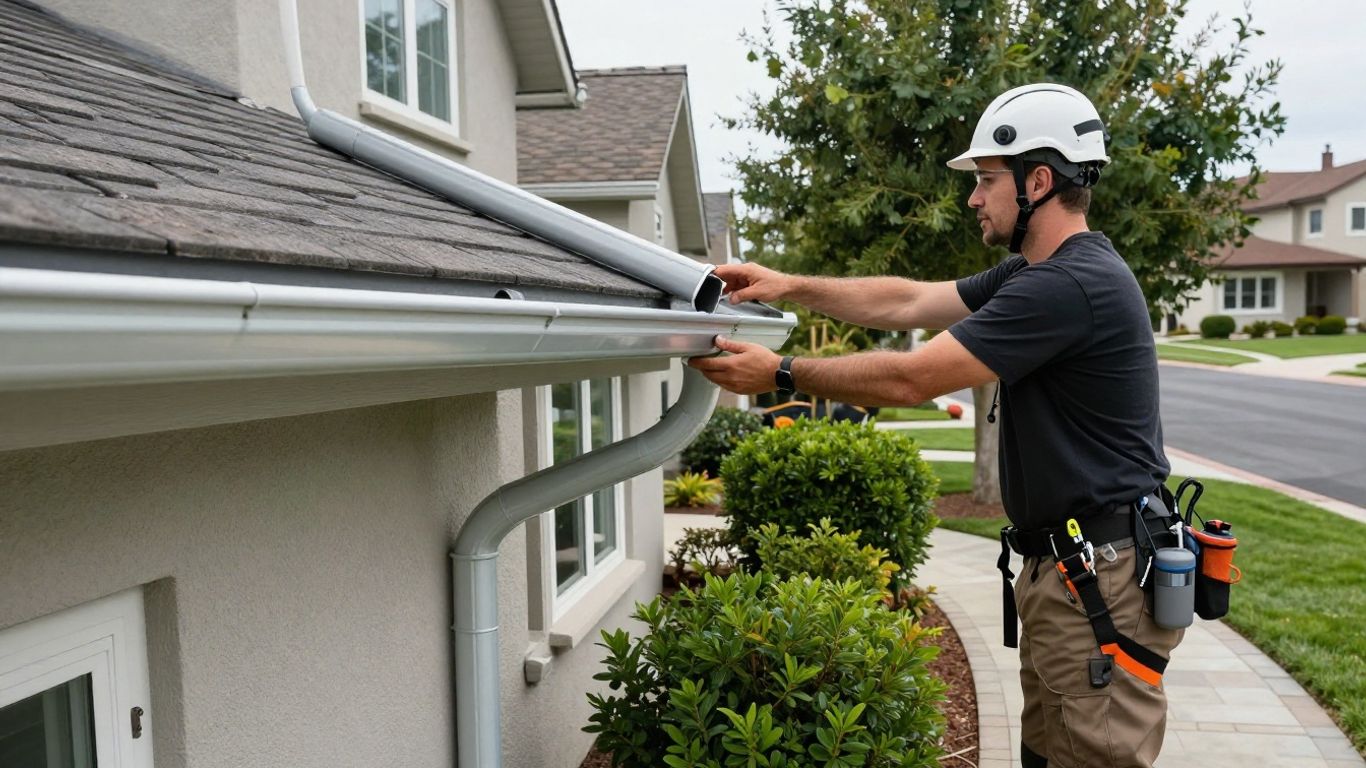
An inspection typically follows the path water should take: from the roof surface to the drip edge, into the gutter, through the outlet and downspout, and away from the structure. The professional checks for low spots, open seams, loose hangers, crushed outlets, and obstructions. Fascia and soffit areas are examined for staining, rot, or movement.
The ground around the home matters as well. Pooling, eroded soil, and water marks can show that a technically intact gutter still discharges poorly. California gutter services can connect property owners with local contractors for installation, repair, maintenance, and replacement, but the on-site assessment remains the basis for selecting the actual scope.
Steps involved in removing damaged gutters and installing new sections
For replacement, workers generally protect nearby landscaping, remove the old sections and fasteners, and inspect the exposed fascia. They then prepare the roof edge, install compatible hangers and outlets, set the intended pitch, and join or form the new runs. Downspouts and extensions are connected afterward so the water has a complete route.
The final check should include a controlled flow test or an inspection during suitable rain. The installer should look for leaks at joints, overflow at corners, movement in the hangers, and discharge too close to the home. Cleanup is part of a complete job, especially when old metal, screws, and roof debris may remain below the work area.
When fascia, soffit, or downspout repairs must happen first
New gutters cannot be securely attached to soft or missing fascia. Rot may need to be removed and the supporting wood repaired before hangers are installed. Damaged soffit can also signal that water has traveled behind the gutter or along the roof edge. Downspouts should be repaired or replaced when they are crushed, disconnected, or unable to carry water from the run.
These related repairs should appear clearly in the written scope. Otherwise, a homeowner may approve gutter work only to discover that the mounting surface or drainage outlet needs separate attention. Coordinating the work usually produces a more reliable result than fastening new material to a weakened structure.
Understanding gutter repair and replacement costs near California
There is no useful single price for every California home. Labor rates, materials, access, roof geometry, local conditions, and the amount of supporting repair can change the estimate substantially. A small one-story repair may be straightforward, while a multilevel replacement with difficult access requires more planning and safety equipment. The best comparison is between written scopes, not just headline totals.
Factors that influence labor and material pricing
Material is only one part of the cost. Seamless runs require site fabrication and careful measurement, while sectional work may involve more joints and individual pieces. Corners, outlets, larger downspouts, guards, removal, disposal, fascia repair, and painting can all change the final amount.
The condition of the existing system also matters. Cleaning a blocked run before testing it is different from removing corroded guttering and repairing damaged wood. Ask whether the estimate includes permits if applicable, disposal, cleanup, downspout extensions, and any work needed to correct the drainage route.
How home height, linear footage, and access affect the estimate
More linear footage generally means more material, hangers, joints, and labor. Height affects ladder placement, staging, fall protection, and the time needed to move safely around the building. A narrow side yard, steep grade, dense landscaping, or limited driveway access can add handling time even on a modest home.
Roof complexity is another cost factor. Multiple valleys, dormers, inside corners, and long uninterrupted runs require more measurements and transitions. An on-site measurement is the dependable way to account for these details, especially when comparing repair with full replacement.
Comparing the long-term value of repair, replacement, and upgrades
Repair is usually most valuable when it corrects a limited failure in a healthy system. Replacement may offer better value when several sections are failing or when new components can improve the system's pitch and discharge. Upgrades such as guards or additional downspout capacity may reduce maintenance, but they still need inspection and occasional cleaning.
Use the estimate to compare expected service, maintenance demands, and the risk of another failure. A lower initial cost is not necessarily economical if water continues to reach the fascia or foundation. A clearly defined project makes that tradeoff easier to judge.
Improving drainage and protecting your home
Gutters only protect a home when water is carried away from the structure. The last few feet of the drainage path can be as important as the roofline itself. Downspouts should empty where water can disperse without washing out soil or collecting against the foundation. Site slope, hardscape, landscaping, and underground utilities all influence the safest route.
Positioning downspout extensions to move water away from the foundation
A downspout extension should discharge on stable ground far enough from the foundation to prevent concentrated flow from returning toward the wall. The outlet should not point toward a neighbor's property, walkway, basement entrance, or low area beside the house. Splash blocks can help with surface discharge, but they are not a substitute for a properly planned route when the grade sends water back toward the building.
Walk the path during rain if possible. Watch whether water disappears into soil, crosses a walkway, or collects at the end of the extension. Los Angeles gutter repair is one example of a local service page that addresses downspout and drainage concerns alongside leaks, clogs, and sagging sections.
Addressing pooling, erosion, and underground drainage concerns
Pooling may result from a short extension, a blocked outlet, compacted soil, or a yard that slopes toward the home. Erosion beneath a discharge point can expose roots and undermine edging or walkways. Underground drains can help in some properties, but they must have a suitable outlet and should not be treated as a place to hide an unresolved blockage.
Before adding a buried line, check its route, cleanout access, slope, and discharge point. A professional can help determine whether surface drainage, a longer extension, a splash block, or an underground solution is appropriate. The answer should reflect the whole site rather than just the visible puddle.
Deciding whether gutter guards or rain chains are worthwhile
Gutter guards can greatly reduce cleaning frequency, but no guard eliminates maintenance. They are often most useful for taller homes, heavy leaf fall, or owners who want to reduce ladder work. The guard must suit the gutter profile and still allow access for inspection. Fine roof grit and small debris may continue to collect on top or beneath the system.
Rain chains can be attractive at selected outlets, but they need a stable receiving area and may not handle concentrated flow as well as a conventional downspout during intense rain. Consider them where the discharge volume and landing surface are appropriate. Function should come before appearance.
Finding a reliable local gutter professional
A trustworthy contractor should be willing to explain the problem in plain language and show how the proposed work changes the water path. Local experience matters because California properties vary widely in rainfall, terrain, tree cover, coastal exposure, and wildfire risk. You do not need the longest proposal; you need one that is specific enough to compare.
What to verify in licensing, insurance, and storm-damage experience
Ask for the contractor's applicable license information and proof of liability and workers' compensation insurance. Confirm who will perform the work and whether subcontractors are involved. For storm-related damage, ask how the team handles detached sections, bent metal, damaged fascia, and debris around the roofline.
Do not climb onto a roof to help with an inspection after wind or fire damage. A qualified professional can assess high or unstable areas with the right equipment. Rain gutter installation is a useful example of the kind of broader project scope to discuss when replacement includes material, finish, downspouts, and installation details.
Questions to ask before approving a repair or replacement estimate
A short conversation can expose gaps in an otherwise attractive quote. Ask what caused the failure, which sections will be repaired or replaced, how slope will be set, and where each downspout will discharge. Also ask whether fascia, soffit, drip edge, or drainage work is included or excluded.
For an active problem, these questions are especially useful:
- Is the estimate based on an on-site inspection and measured linear footage?
- Are removal, disposal, fasteners, sealants, and cleanup included?
- Will the contractor test the gutters and downspouts after the work?
- What happens if hidden fascia or soffit damage is found?
The answers should be written into the proposal rather than left as assumptions. That makes changes easier to discuss before work begins.
How to compare warranties, timelines, cleanup, and written proposals
Compare what the warranty covers, how long it lasts, and whether it applies to materials, labor, or both. A timeline should identify the expected start window, weather-related limits, and the work sequence. Cleanup should cover removed guttering, fasteners, debris, and any disturbed landscaping.
A useful proposal names the material, profile, dimensions, outlets, downspouts, extensions, guards, repair areas, and exclusions. It should also state the payment schedule and how change orders are approved. Take time to compare these details before choosing a contractor, particularly when the project follows a storm and several decisions feel urgent.
Conclusion
Gutter repair and replacement near California is less about choosing the newest-looking channel and more about restoring a complete path for water, from roof edge to safe discharge. Inspect early, match the solution to the actual damage, and make sure fascia, downspouts, and surrounding drainage are included in the plan. A clear written estimate from a qualified local professional can protect both the home and the homeowner's budget.
Frequently Asked Questions
How often should California gutters be cleaned?
Twice a year, commonly in spring and fall, is a practical starting point. Homes beneath heavy tree cover or near areas with substantial airborne debris may need additional cleanings.
How can I tell whether gutters need repair or replacement?
Localized leaks, a loose hanger, or one detached section may be repairable. Widespread corrosion, repeated separation, distorted channels, and damage across several runs usually support a replacement discussion.
What gutter material works best for a California home?
Aluminum, steel, copper, and vinyl can all be suitable in the right setting. Compare durability, appearance, maintenance, climate exposure, roof design, and budget rather than choosing by material name alone.
How far should downspouts extend from the foundation?
They should discharge far enough away that water does not flow back toward the foundation or collect beside the wall. The needed distance depends on grading, soil, hardscape, and whether the water enters a planned drainage system.
Are seamless gutters better than sectional gutters?
Seamless gutters have fewer mid-run joints, which can reduce potential leak points. Sectional gutters may be practical for smaller repairs or short runs. Installation quality, slope, support, and maintenance remain important with either style.
Are gutter guards maintenance-free?
No. Quality guards can reduce cleaning frequency, but roof grit, small debris, and buildup still require inspection. Guards should be compatible with the gutter system and kept accessible for maintenance.
When is the best time to replace gutters?
The best time is before the season when the home receives its heaviest rain, provided the roofline can be inspected safely and the contractor has access. After storm damage, arrange an assessment promptly while documenting visible problems from the ground.