Key Takeaways
A well-planned gutter system does more than catch rain. It directs water away from the structure and can prevent avoidable damage.
- Look for sagging, leaks, separation, rust, and water pooling before choosing replacement over repair.
- Match the gutter profile, material, and size to the home, roof, climate, and expected rainfall.
- Compare local contractors by licensing, insurance, warranties, references, and the detail in their estimates.
- Ask how the installer will handle slope, fascia condition, downspout placement, and drainage beyond the foundation.
- Plan for seasonal cleaning and inspections, even if you add gutter guards.
Understand when your home needs new gutters
Gutters often fail gradually, so the first clues may appear as stains or damp soil rather than a dramatic collapse. Walk around the house during or shortly after rain, but do not climb a ladder just to investigate. If you are searching for gutter installation near me, first determine whether the system truly needs replacement or whether a focused repair would solve the problem.
Warning signs of gutter failure
Check for water spilling over the front edge, pools beneath downspouts, and dark streaks on siding. Gutters that pull away from the fascia, hold standing water, or show rust holes are also warning signs. A leaking gutter behind the fascia deserves attention because hidden moisture can damage the wood supporting the system.
From the ground, look for uneven lines and separated joints. You may also notice peeling paint, washed-out soil, or plants growing in the channel. These symptoms do not identify one exact cause, but they give a contractor useful starting information.
Repair versus complete replacement
A sound gutter run with one loose hanger or a small seam leak may only need repair. Replacement becomes more sensible when several sections sag, corrosion is widespread, or the fascia is too damaged to hold new fasteners. The contractor should explain what failed and why, rather than treating every visible problem as a reason for a full upgrade.
Ask whether the proposed work includes removing old material, repairing fascia, resealing joints, and reconnecting downspouts. A low repair price can be misleading if those related tasks are left out. A clear diagnosis matters more than a quick recommendation.
How gutters protect siding, fascia, and foundations
A properly sloped gutter catches roof runoff and sends it to downspouts instead of allowing water to run down walls. That reduces repeated wetting around siding, trim, fascia, and foundation soil. The system is only one part of water management, however; the discharge point and surrounding grade matter just as much.
For a useful local example, homeowners can review Los Angeles gutter services when thinking about how installation, repair, replacement, and maintenance fit together. The principles remain similar in other regions, although rainfall, soil, and roof design change the details.
When storm damage requires prompt service
Call for prompt help when a gutter has fallen from the roof, a downspout is detached, or water is entering near doors and windows. After a major storm, look for bent channels, missing sections, exposed fasteners, and damaged fascia from the ground. Keep people away from hanging metal and do not work near power lines.
A temporary ground-level measure, such as moving a loose extension away from a walkway, may reduce a trip hazard. It is not a substitute for inspection. Storm damage can also reveal roof-edge or soffit problems that need coordination with other work.
Choose the right gutter system for your home
The right system depends on more than appearance. Roof area, roof pitch, rainfall intensity, fascia condition, and the number of corners all affect the choice. A contractor should measure the property and explain how each option will move water, not simply present a color chart.
Seamless versus sectional gutters
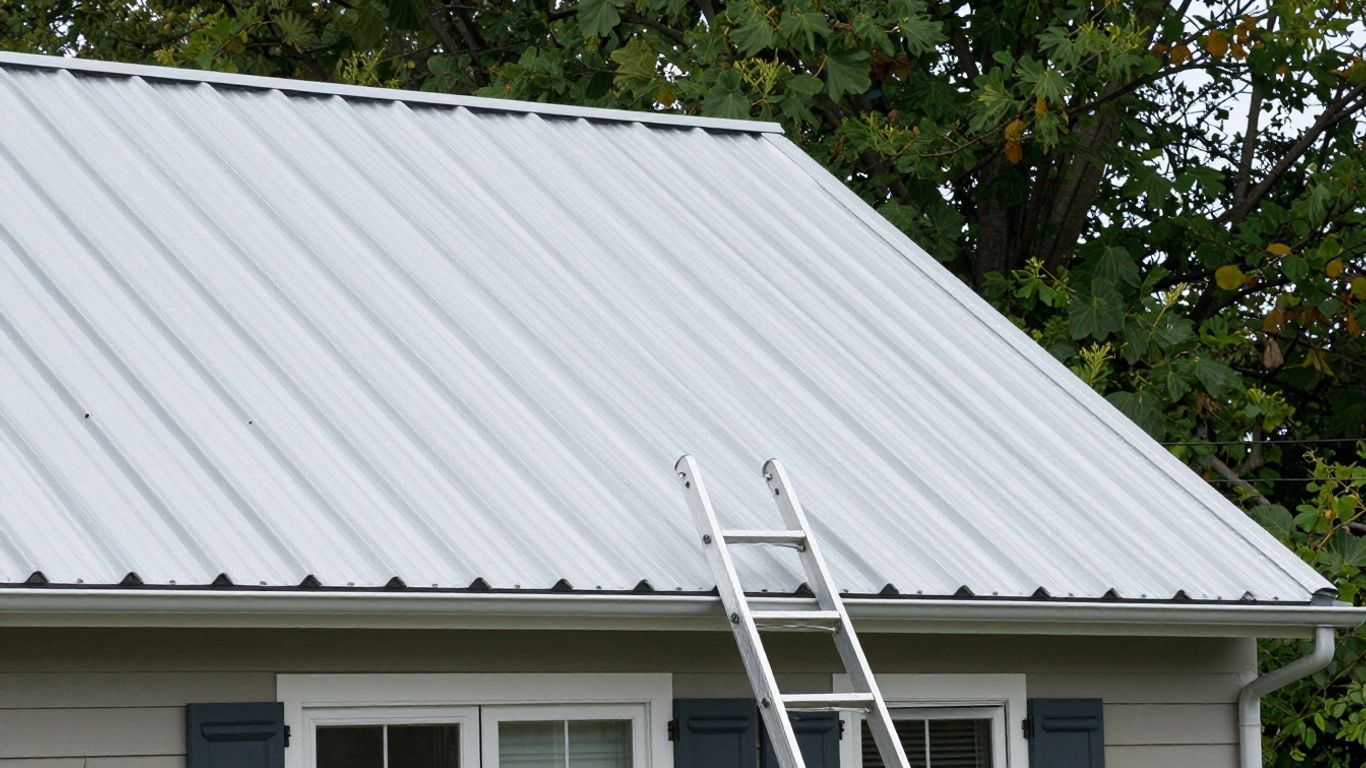
Seamless gutters are roll-formed on site in continuous runs, so they have no mid-run joints. Fewer joints can mean fewer potential leak points and a cleaner appearance, though corners and outlets still require connections. Sectional gutters are assembled from shorter pieces and may suit a small, simple project or a repair that matches an existing run.
Ask how the installer will transport and position long seamless sections. The answer can reveal whether the company has planned for access, landscaping, and the home’s layout. Seams are not automatically a failure, but poor joining and inadequate support can shorten the life of any system.
K-style versus half-round profiles
K-style gutters have a decorative ogee front and are common on residential homes. Half-round gutters have a rounded shape and can complement older, historic, or traditionally styled properties. Both can work when correctly sized and sloped, so the best profile is usually a balance of capacity, mounting conditions, and architectural fit.
Bring photographs of the roofline and trim when requesting estimates. A contractor can then discuss how the profile will meet the fascia and whether existing brackets, downspout outlets, or trim details need changes.
Aluminum, copper, steel, and vinyl options
Aluminum is widely used because it is light and available in many finishes. Copper offers a distinctive appearance and sits at the premium end of material pricing. Steel can provide a sturdy option but requires attention to corrosion, while vinyl is light and economical but may be less suitable for demanding weather or long exposed runs.
Material choice should account for coastal air, freeze-thaw cycles, falling branches, sun exposure, and the expected maintenance routine. A sample color or finish viewed outdoors is more useful than a screen image when appearance matters.
Selecting the right gutter and downspout sizes
Five-inch gutters are common on many homes, while six-inch systems may be appropriate for larger roof areas, steep pitches, or heavy rainfall. Downspout size and placement must support the channel; an oversized gutter with too few outlets can still overflow. The installer should calculate roof drainage rather than use one size for every elevation.
A practical estimate should show where each downspout will go and where it will discharge. That plan connects the gutter choice to the next stages of drainage work instead of treating the downspout as an afterthought.
Evaluate local gutter installation contractors
A nearby contractor should be easy to identify, easy to reach, and willing to explain the work in plain language. Search results are only a starting point. Confirm that the company actually serves your area, handles the type of property you own, and can inspect the roofline in person.
What to look for in a nearby company
Look for experience with installation, replacement, repairs, downspouts, and fascia-related coordination. A company that only sells materials may not be the right fit for a complicated drainage problem. The estimate should describe the proposed system, not just list a total and a vague phrase such as “new gutters.”
For initial research, a gutter contractor directory can help you compare service categories, distance, and available business information. Treat directory details as a screening tool, then verify the company’s current credentials directly.
Licenses, insurance, warranties, and experience
Ask whether the contractor holds the licenses required in your state or municipality and carries current liability and workers’ compensation insurance. Request warranty terms in writing, including what is covered, how long coverage lasts, and who handles a claim. Experience with your roof height and exterior materials is especially relevant.
The same careful approach applies whenever you evaluate a provider: documentation should be specific and verifiable. For comparison, Nutrivance Laboratories describes batch-specific documentation in a different product category; the broader lesson is to be wary of vague claims and missing records, not to treat the businesses as equivalent.
Reviews, references, and examples of completed work
Read recent reviews for patterns involving communication, cleanup, leaks, and follow-up. A single complaint is not conclusive, but repeated concerns deserve a direct question. Ask for references from projects similar to yours and, when possible, inspect completed work from the street.
Photographs should show details such as clean corners, secure hangers, neat downspout transitions, and protected landscaping. Do not rely only on polished close-ups that hide how water is routed at ground level.
Questions to ask before accepting an estimate
A good estimate gives you a chance to compare scope rather than just price. Ask who will perform the work, how long the installation may take, and what happens if rotten fascia is discovered. You can also ask how waste, old gutters, and site cleanup are handled.
If a project involves other materials or tools, the habit of checking fit and safety is still useful; for instance, tile leveling kits are described by their components and intended applications rather than by a bare product name. For gutters, ask for equally concrete details about hangers, outlets, seams, and extensions.
Know what affects gutter installation costs
Installation pricing varies with the property and the work hidden behind the visible channel. Linear footage is only one factor. Material, roof height, access, removal, fascia repairs, downspouts, and drainage improvements can all change the estimate.
Linear footage and home layout
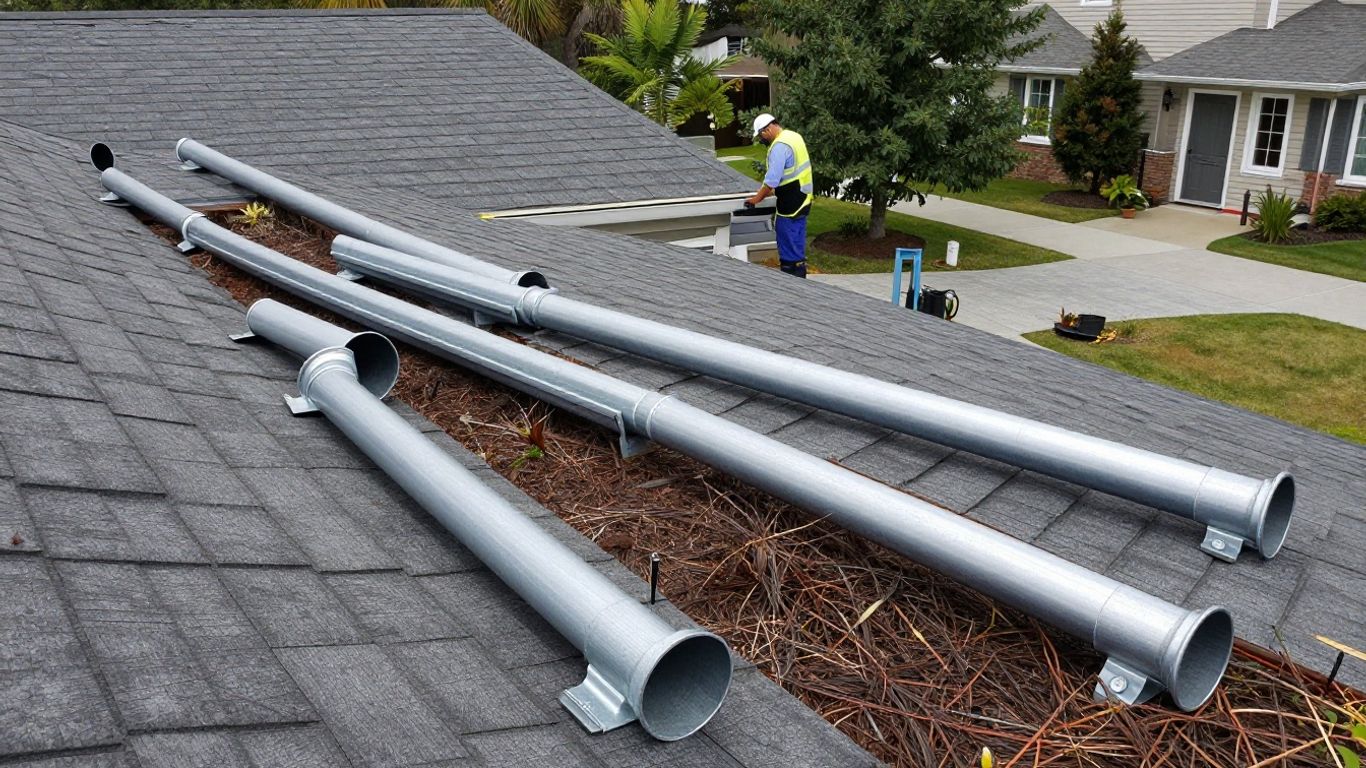
A long, single-story ranch is usually simpler to measure and access than a home with multiple roof elevations, dormers, inside corners, and attached structures. Every change in direction may require additional fittings or labor. The contractor should measure each roofline instead of estimating from the home’s floor area.
Ask whether the quote includes all elevations, detached garages, porches, and sections that are difficult to reach. Comparing estimates is only useful when the measured scope is comparable.
Material and profile pricing
Aluminum generally costs less than copper, while steel and vinyl occupy different positions depending on local availability and installation requirements. Profile, finish, thickness, and color can affect the total as well. Copper may also involve specialized fittings and a different visual aging process.
The estimate should identify the material and profile in writing. If two bids use different materials, compare expected maintenance and appearance alongside the initial price.
Labor, height, access, and removal costs
Two-story work, steep roofs, limited access, and delicate landscaping can increase labor. Removing and disposing of old gutters takes time, particularly when fasteners are embedded or fascia needs repair. A responsible contractor will account for ladder or lift access and explain any allowance for concealed damage.
Before signing, confirm whether cleanup and disposal are included. This prevents a final invoice from feeling unexpectedly different from the original scope.
Downspouts, extensions, and drainage upgrades
A new channel cannot solve a discharge problem by itself. The price may include additional downspouts, larger outlets, splash blocks, extensions, buried drainage, or grading near the foundation. Each upgrade should be tied to a specific location where water currently collects or flows too close to the house.
Use the estimate to compare the drainage plan line by line. The table below is a simple way to organize common items and the reason they may appear in a proposal.
| Estimate item | Why it may be needed | What to confirm |
|---|---|---|
| Gutter runs | Captures roof runoff | Linear footage and profile |
| Downspouts | Moves water from the channel | Quantity, size, and locations |
| Extensions | Carries discharge farther away | Length and final outlet |
| Fascia repair | Provides sound mounting support | Included materials and labor |
The most useful quote connects each item to the home’s water path. If an extension ends beside the foundation or a downspout sits under a large roof area, ask what adjustment the installer recommends.
Gutter guards and other optional add-ons
Gutter guards can reduce cleaning frequency, but no guard is maintenance-free. They may be most useful on tall homes, properties beneath heavy tree cover, or households that want to limit ladder work. Screens, covers, and micro-mesh products differ in how they handle leaves, needles, roof grit, and ice.
Request the guard type, installation method, cleaning expectations, and warranty terms. Optional add-ons should solve a documented maintenance concern rather than be added automatically.
Follow the professional installation process
Professional installation is a sequence of decisions, not simply the act of fastening a channel to the fascia. The crew should understand how water moves across every roof elevation and how it will leave the property. Good preparation also makes later maintenance easier.
Measuring rooflines and planning water flow
The installer begins by measuring runs, corners, valleys, and roof areas that contribute runoff. Downspouts are planned around doors, windows, walkways, landscaping, and the available discharge area. Large roof sections may need more outlets or greater capacity than a short eave.
Ask to see the proposed water path before work begins. A quick sketch or marked photograph can reveal conflicts that are harder to correct after installation.
Checking fascia, soffits, and roof edges
Fascia must be strong enough to hold hangers, and damaged wood should be addressed before new gutters are installed. The crew should also look at soffits, drip edges, roof overhangs, and the condition of existing trim. Water entering behind the channel may point to a missing or poorly positioned apron.
If repairs are needed, get their scope and price before proceeding. New gutters attached to unsound wood are unlikely to remain properly aligned.
Setting the correct gutter slope
Gutters need a modest, consistent slope toward their outlets. Too little pitch can leave standing water, while excessive pitch is visible and may send water too forcefully toward one end. The correct arrangement depends on the run length, outlet location, and system design.
A careful crew checks alignment across the full run rather than judging it from one point. Small adjustments during installation can prevent persistent pooling and overflow.
Installing hangers, seams, outlets, and downspouts
Hangers should be spaced and fastened to sound material, with extra attention near corners and outlets. Seams need clean joining and appropriate sealant, while downspouts should be securely attached and directed toward a suitable extension. Long runs must remain straight without pulling away from the fascia.
Before the crew leaves, examine corners and transitions from the ground. Clean lines, secure straps, and unobstructed outlets are useful visual checks, although they do not replace a water test.
Inspecting the system with a controlled water test
A controlled water test helps reveal leaks, slow drainage, overflow, and water discharging in the wrong place. The installer can add water at several roofline points and watch how it travels through the system. Testing is especially useful at corners, seams, outlets, and changes in elevation.
Use the test as a final conversation with the crew, not as a performance. Any adjustment should be made while equipment and materials are still on site, and the finished discharge should be checked after the water leaves the downspout.
Improve drainage around your home
Gutters protect the house only when water ends up somewhere safe. Soil slope, hardscape, buried lines, and landscaping all influence the final result. Walk the discharge route in both dry weather and after rain so you can see whether water is actually moving away from the structure.
Determining how many downspouts you need
The number depends on roof area, gutter capacity, run length, rainfall, and where water can be discharged. Long runs and large roof sections often need more than one outlet. A contractor should explain the placement rather than choose downspouts based only on the home’s exterior symmetry.
Downspouts should not empty where they block a walkway or concentrate water beside a basement wall. Placement is a drainage decision first and a visual decision second.
Choosing the right downspout extensions
Extensions should carry water far enough from the foundation to match the site’s slope and soil conditions. Flexible sections are convenient but can collapse or shift, while rigid sections may be more durable and easier to keep aligned. The outlet should not create a new problem in a neighbor’s yard or against a retaining wall.
Check extensions after mowing, landscaping, and winter movement. A disconnected extension can send several storms’ worth of runoff into one small area.
Connecting gutters to underground drainage
Buried drainage can improve appearance and move water across a property, but it needs a suitable outlet and careful grading. The installer should discuss cleanouts, access for maintenance, and the risk of clogging from roof debris. Never connect rainwater to a system that is not designed or permitted to receive it.
Ask where the underground line ends and how it can be inspected. A hidden pipe is not automatically a better solution if its outlet is unclear or inaccessible.
Preventing water pooling near the foundation
Keep soil sloped away from the home where possible, and make sure extensions discharge onto a stable surface. Watch for low spots created by erosion, compacted soil, or settled paving. Persistent pooling may require grading or a broader drainage review in addition to gutter work.
After installation, inspect the ground during a strong rain. Freshly washed soil, splash marks, or wet foundation walls indicate that the discharge plan needs another look.
Considering rain chains and alternative outlets
Rain chains can be attractive at selected outlets, especially where water can fall onto a basin, gravel bed, or other prepared surface. They are not a universal replacement for downspouts and may perform poorly in wind or very heavy rainfall. Any alternative outlet must prevent splashing against siding and foundation soil.
Discuss these choices with the installer before the gutter layout is finalized. An attractive outlet still needs a controlled path for water.
Protect your investment after installation
New gutters need routine attention even when the installation is sound. Leaves, roof grit, nests, ice, and storm debris can block the system or add weight to the channel. A simple inspection habit is cheaper and safer than waiting for a visible failure.
Building a seasonal cleaning schedule
Spring and fall cleaning is standard guidance for many homes, with extra visits where trees shed heavily. Remove debris, flush the channels, and check that downspouts flow freely. Use stable equipment and avoid ladder work near electrical lines; hire a professional if the roof is high, steep, or difficult to access.
Record the cleaning date and any defects you notice. That small record helps distinguish a recurring blockage from a developing structural problem.
Deciding whether gutter guards are worthwhile
Guards can reduce the amount of debris entering the channel, but they still need inspection and occasional cleaning. They tend to be more valuable on two-story homes, under heavy leaf cover, or where ladder access is unsafe. The right product depends on the kind of debris and the roof’s existing condition.
Do not install guards over damaged, sagging, or poorly sloped gutters. Correct the underlying system first, then ask how the guard will be removed or serviced later.
Inspecting for leaks, sagging, and separation
Look along the gutter line for dips, open seams, loose straps, and gaps between the back edge and fascia. Check downspout connections after heavy rain and look for stains beneath joints. Small problems are often easier to repair before they damage trim or wash out soil.
A ground-level inspection is appropriate for routine observation, but climbing or reaching from a roof edge adds risk. If you cannot safely see the connection, arrange a professional inspection.
Preparing gutters for storms, ice, and heavy rainfall
Before a storm, clear obvious debris and make sure extensions are connected. In cold regions, inspect for loose sections that could worsen during freeze-thaw cycles, but do not chip ice from a gutter while standing on an unstable ladder. After the storm, look for detached pieces, crushed outlets, and new erosion.
Keep water away from electrical equipment and avoid touching storm-damaged metal near service lines. Prompt professional help is the safer choice when structural damage or height is involved.
Knowing when to call for gutter repair or replacement
Call a contractor when leaks return after sealing, multiple hangers fail, sections pull away, or the fascia is soft. Replacement may be the better long-term choice when corrosion and misalignment affect much of the system. On Scene Gutters covers seamless gutter installation, gutter replacement, gutter repair, cleaning, downspout work, and storm damage gutter repair through a nationwide network of contractors.
For a second opinion or help comparing repair and replacement, On Scene Gutters is a relevant place to start. Share photographs from the ground, describe when the issue appears, and request a written scope before work begins.
Conclusion
Choosing gutter installation near me is less about finding the closest name and more about finding a contractor who understands the full path of rainwater. Compare the system design, installation method, drainage plan, credentials, and maintenance needs together. A careful assessment now can help protect the roof edge, exterior walls, soil, and foundation for years of ordinary weather.
Frequently Asked Questions
How much does new gutter installation cost?
Cost depends on material, linear footage, home height, layout, and local labor rates. Aluminum seamless gutters are commonly budget-friendly, while copper is at the premium end. An on-site measurement is the most reliable way to receive an accurate estimate.
How often should gutters be cleaned?
Twice a year, usually in spring and fall, is common guidance. Homes beneath heavy tree cover may need additional cleanings, especially after major leaf drop or storms.
Are gutter guards worth it?
They can reduce cleaning frequency, but no guard is completely maintenance-free. They may be worthwhile for tall homes, heavy leaf fall, or homeowners who want to reduce ladder use, provided the existing gutters are sound.
What size gutters do I need?
The appropriate size depends on roof area, pitch, rainfall, gutter length, and downspout placement. A contractor should assess each roof elevation rather than automatically use one size throughout the property.
How far should downspouts extend from the house?
They should discharge far enough away to avoid concentrating water beside the foundation, with the exact distance depending on slope, soil, grading, and the drainage design. Extensions should end somewhere stable and appropriate for the property.
When is the best time of year to replace gutters?
The best timing depends on local weather, contractor availability, and the urgency of the damage. Replace failing sections before the next season of heavy rain, ice, or storms rather than waiting for a convenient calendar date.
Can gutter guards be installed on existing gutters?
They can often be added to existing systems, but the gutters should first be checked for sound attachment, proper slope, leaks, and adequate capacity. Guards will not correct sagging, damaged fascia, or poor drainage design.