
Key Takeaways
A well-planned gutter system helps a Fort Collins home handle snowmelt, summer storms, and repeated freeze-thaw movement.
- Inspect the roof edge, fascia, soffits, and drainage path before choosing new gutters.
- Compare material, profile, size, seam layout, and color as one coordinated system.
- Use accurate roofline measurements and thoughtful downspout placement to control runoff.
- Treat guards and underground drainage as upgrades that should match the property.
- Plan seasonal inspections so small leaks or loose fasteners do not become major damage.
Understand why gutter installation matters in Fort Collins
Gutters do more than keep rain off the front steps. In Fort Collins, a system also has to manage melting snow, hail, strong summer downpours, and water that repeatedly freezes and thaws at the roof edge. Good planning keeps runoff moving away from the foundation instead of leaving it to find its own path.
Protecting foundations from snowmelt and summer storms
When snow melts quickly or a storm drops a large amount of rain, roof runoff can collect beside the foundation. That moisture may erode soil, stain siding, or enter a basement or crawlspace. A properly pitched gutter carries water to downspouts, while extensions or drainage lines move the discharge farther from the house. On Scene Gutters connects Fort Collins property owners with contractors who specialize in seamless gutter and downspout installation.
Managing runoff around Colorado’s freeze-thaw cycles
Freeze-thaw weather can expose weak joints, loose hangers, and poorly supported corners. Water enters a small opening, freezes, expands, and then leaves the material a little more vulnerable when it thaws. The goal is not merely a larger gutter; it is a secure system with sound attachment points and a clear route away from the home.
Recognizing signs that existing gutters are failing
Many problems are visible from the ground. Look for sections pulling away from the fascia, water spilling over the front edge, rust spots, separated seams, peeling paint, or soil washed out below a downspout. A downspout that stays wet around its base after a storm may also be clogged or too short. Take photos during rainfall if it is safe to do so; they can help a contractor diagnose the pattern.
Knowing when a home needs new gutters instead of repairs
A short leak or loose fastener may be a straightforward repair. Replacement becomes more sensible when multiple sections sag, corrosion is widespread, the fascia has deteriorated, or the layout repeatedly overflows despite cleaning. On Scene Gutters describes repair work for leaks, cracks, sagging sections, clogs, and downspout issues, while a replacement assessment can address a system that has reached the end of its useful service.
Choose the right gutter materials and profiles
Material affects weight, appearance, durability, and the way a system responds to weather. Profile affects capacity and how the gutter sits against the roofline. Start with the home’s exposure and structure, then narrow the choice by maintenance expectations and appearance rather than choosing from a color chart alone.
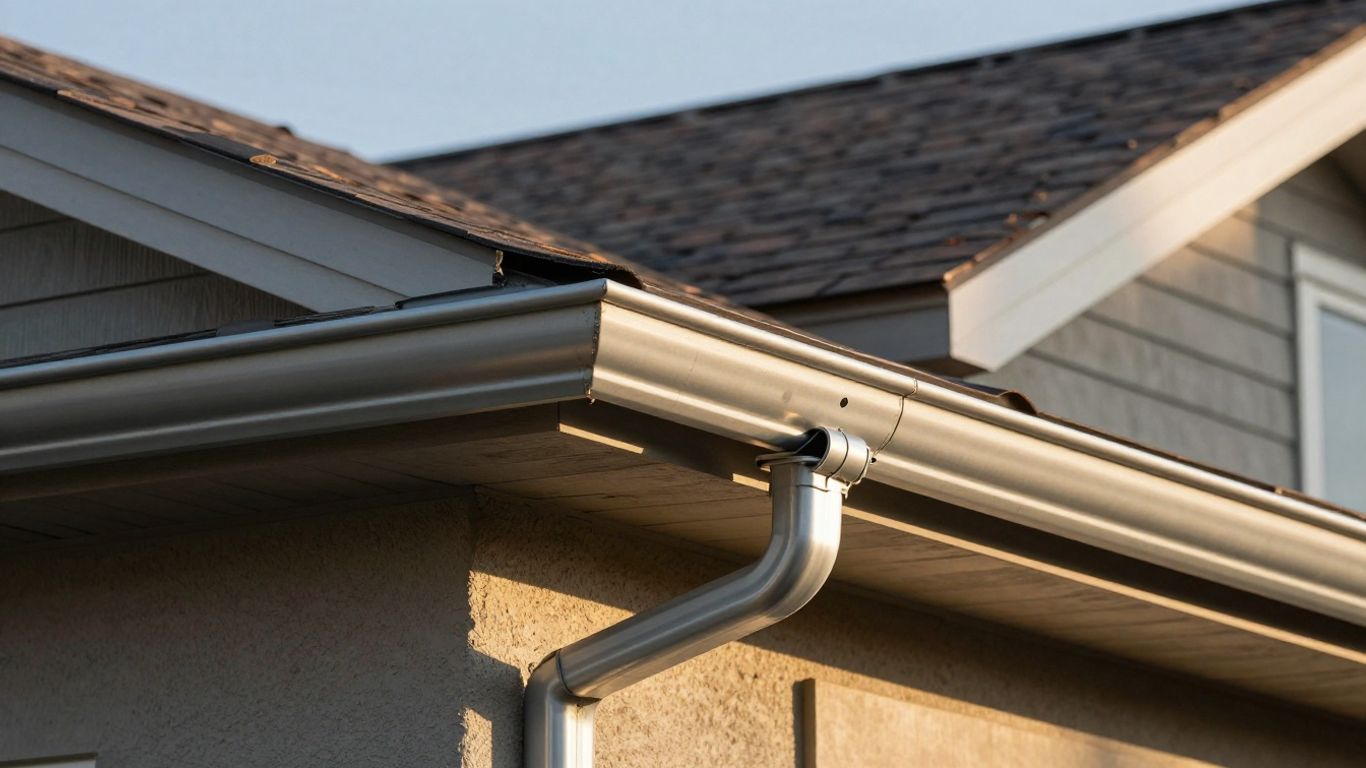
Comparing aluminum, steel, copper, and vinyl gutters
Aluminum is light, widely available, and commonly selected for residential work. Steel offers greater weight and stiffness but needs careful attention to corrosion protection. Copper has a distinctive appearance and a higher initial cost, while vinyl is lightweight and does not rust but can become brittle or distort with temperature changes. The best choice depends on the roofline, attachment structure, weather exposure, and budget.
Deciding between seamless and sectional gutters
Sectional gutters are assembled from shorter pieces, so they have more joints to seal and inspect. Seamless gutters are roll-formed in continuous runs, with seams generally limited to corners and end caps. That can simplify the leak-prone points, but installation still depends on accurate measuring, sound fascia, and correct slope. On Scene Gutters identifies seamless gutter installation as one of its covered services through its contractor network.
Selecting K-style or half-round gutter profiles
K-style gutters have a decorative ogee-shaped front and are the most common residential profile. They fit many contemporary and traditional homes and can carry substantial runoff when sized correctly. Half-round gutters have a rounded interior and a more period-oriented appearance. Whichever profile you choose, confirm that hangers, outlets, corners, and downspouts are compatible with it.
Matching gutter colors and finishes to the home
A gutter can blend into the fascia, coordinate with trim, or provide a deliberate contrast. Bring samples outside because sunlight changes how finishes look against siding and roofing. Also consider downspouts: a matching vertical line usually looks calmer than a series of unrelated colors. For a wider exterior project, keep the same disciplined approach to materials and lead times used in a custom cabinetry plan, even though the trades are different.
Plan the gutter system for your home
A gutter estimate starts with dimensions, but dimensions are only part of the design. Roof valleys, steep slopes, dormers, tree cover, and the location of paved areas all affect how water behaves. A practical plan connects each roof section to a downspout and then follows the water to its final discharge point.
Measuring rooflines and estimating linear footage
Measure each straight roof edge separately and record corners, inside angles, outside angles, and valleys. Do not rely on the footprint of the house, since roof projections and additions change the actual gutter length. A contractor should verify measurements from the roofline and note difficult access, second-story work, and areas where old gutters need removal.
Choosing the right gutter size for local rainfall
Five-inch gutters suit many homes, while six-inch systems may be appropriate for larger roof areas, steep slopes, or concentrated flow. Size should be paired with the downspout diameter and the amount of roof draining into each run. Oversizing one short section will not correct a poor outlet location or an undersized downspout.
Calculating how many downspouts are needed
Downspouts should be distributed so long runs do not carry more water than they can handle. Place outlets near corners, at the low points of properly sloped runs, and where discharge can be directed safely. A simple roof sketch helps reveal whether one downspout is serving too much area or whether a valley is sending a sudden surge into a small section.
For the planning conversation, gather these details before requesting an estimate:
- Total gutter length by roof section
- Number of inside and outside corners
- Roof valleys and areas with concentrated runoff
- Existing downspout locations and extension lengths
- Fascia damage, access limits, and removal requirements
This information does not replace an on-site measurement, but it makes the first conversation more productive. It also keeps drainage decisions connected to the actual shape of the home.
Planning downspout extensions and underground drainage
A downspout should not release water directly beside the foundation. Extensions can carry it across a lawn or planting bed, while underground drainage can move it to a suitable outlet when surface routing is impractical. Before burying a line, confirm its slope, outlet, cleanouts, and any utility conflicts. If several exterior projects are being coordinated, even a pool installation guide can be a useful reminder that delivery, access, excavation, and final drainage need to be discussed early.
Prepare for a professional gutter installation
Installation day goes more smoothly when the roof edge is ready and the drainage plan is settled. A contractor needs room to work safely, but the homeowner also needs a clear scope: removal, fascia work, gutter fabrication, downspouts, guards, disposal, and cleanup. Sound attachment points matter as much as the visible finish.
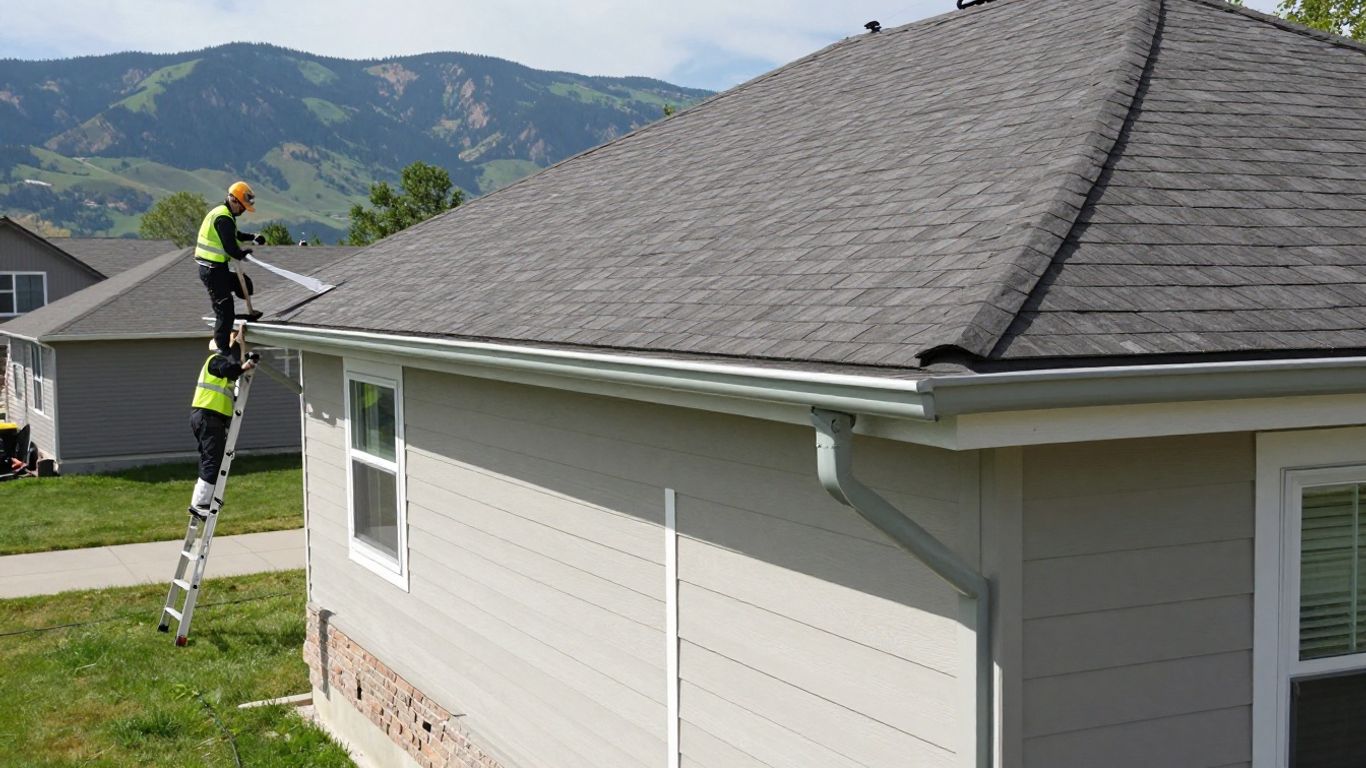
Inspecting fascia, soffits, and roof edges
Fascia boards carry the gutter hangers, so soft or rotted wood cannot provide dependable support. Check for staining behind the existing gutter, gaps at the soffit, and exposed roof-edge damage. Do not climb a ladder to inspect a high or steep roof unless you have the right equipment and experience; a ground-level review followed by professional inspection is safer.
Addressing damaged drip edges before installation
The drip edge helps guide water from the roof into the gutter and protects the roof edge. If it is bent, short, corroded, or hidden behind old material, water may run behind the gutter and wet the fascia. Ask whether the drip edge needs repair or replacement before the new system is attached. This is a small detail that can prevent a confusing “leak” after installation.
Confirming slope and outlet placement
Gutters need a consistent fall toward their outlets, but the slope should not be so aggressive that the front edge looks visibly tilted. Review where each run begins and ends, which corners receive outlets, and how valleys will be handled. A written sketch or marked-up photo helps both sides agree before fabrication begins.
Reviewing permits, access, warranties, and project timing
Ask whether local permits or association rules apply, how ladders or lifts will access the property, and what happens if weather delays the work. Clarify workmanship coverage, manufacturer coverage, removal of old gutters, and cleanup. For any paid promotion or service business supporting the project, transparent Google Ads & PPC management is a separate marketing concern, not a substitute for checking the installation scope itself.
Compare gutter installation costs in Fort Collins
The cost of gutter installation in Fort Collins depends on the home, not just the material selected. Linear footage, stories, corners, roof height, access, removal, fascia repairs, and drainage work can all change the estimate. Treat online figures as starting points and compare scopes rather than isolated totals.
Factors that affect the total project price
A long, simple ranch roof usually requires less labor than a taller home with many corners and roof valleys. Difficult access, deteriorated fascia, old gutter removal, downspout rerouting, and underground drainage add work. Guards may add another installation step. Local labor rates and scheduling also influence the final number.
How material and profile choices change the estimate
Aluminum is often a practical budget choice, while steel, copper, unusual profiles, and custom color requests can raise the material cost. Seamless fabrication reduces mid-run joints but requires specialized equipment and on-site setup. Ask for the price of each component separately so you can see whether a difference comes from material, labor, access, or drainage.
When gutter guards increase upfront costs
Guards add material and labor, and the roof edge may need adjustments before they fit correctly. They can reduce cleaning frequency, especially on taller homes or properties with heavy leaf fall, but they are not maintenance-free. A realistic estimate includes cleaning access and the possibility of occasional debris removal.
Why an on-site measurement improves pricing accuracy
An on-site visit reveals details that satellite images and rough measurements miss, including fascia condition, roof pitch, outlet conflicts, and where water currently pools. It also lets the installer confirm color, profile, and downspout routing. A useful estimate should describe those observations rather than present a bare per-foot number. Homeowners comparing options can consult a local gutter comparison, but should still request a job-specific measurement.
Evaluate gutter guards and drainage upgrades
Gutter guards are most useful when they address a real maintenance problem. Trees, roof design, ladder access, and the type of debris on the property all matter. Drainage upgrades deserve equal attention because a clean gutter can still cause foundation trouble if its downspout releases water too close to the home.
Deciding whether gutter guards fit your property
Quality guards can reduce how often gutters need cleaning, but every system still needs inspection. They may make sense for a two-story home, a roof beneath mature trees, or a homeowner who prefers to limit ladder work. They are less compelling when the roof is easily accessible and debris is minimal. Confirm that the guard can be removed or serviced when the gutter itself needs attention.
Comparing screens, mesh, reverse-curve, and brush guards
Screens block larger leaves with a simple surface, while mesh uses smaller openings to keep out finer debris. Reverse-curve designs direct water around a shaped cover, and brush guards catch debris above the gutter channel. Each style has tradeoffs involving snow, ice, pine needles, roof slope, cleaning, and compatibility with the existing system. Ask for a sample or close-up explanation rather than choosing by name alone.
Choosing guards for pine needles and heavy leaf fall
Pine needles can collect on top of guards and lodge at edges, while wet leaves may form a mat that slows water entry. Homes with heavy tree cover need a maintenance plan even after guards are installed. The installer should explain how the selected guard handles the property’s actual debris and whether roof access is required for periodic brushing or rinsing.
Extending downspouts to move water away from the foundation
An extension should discharge on stable ground with enough distance to prevent water from flowing back toward the house. Surface extensions are easy to inspect, while buried lines look cleaner but need a suitable outlet and occasional maintenance. If water still pools after an extension is added, the issue may involve grading or soil drainage rather than the gutter itself.
Maintain and inspect new gutters year-round
New gutters still need routine care. Fort Collins weather can move debris into channels, loosen fasteners, and leave ice or hail damage that is not obvious from indoors. A short inspection in each season helps preserve the roof edge and gives you a record of changes over time.
Scheduling spring and fall gutter cleanings
Spring cleaning removes winter debris and checks the system before heavy storms. Fall cleaning is especially important beneath deciduous trees, when leaves can block outlets before snow arrives. Twice-yearly service is a reasonable baseline, with extra attention for heavy tree cover. Clear the downspout openings as well as the horizontal runs.
Checking for leaks, sagging, and loose fasteners
Walk the perimeter after a moderate rain and look for water escaping at seams, corners, or behind the gutter. Check for a visible dip between hangers and for downspouts that have pulled away from the wall. Small defects are easier to address before they soak the fascia or wash out soil. Never inspect from a wet roof or unstable ladder.
Preparing gutters for snow, ice, and severe weather
Before winter, remove debris, confirm that outlets are open, and make sure extensions will not be crushed or redirected by snow removal. After hail, high winds, or a heavy snow event, inspect from the ground for detached sections and bent outlets. Do not chip ice from a gutter or climb onto an icy roof; call a qualified professional when conditions are unsafe.
Knowing when to call for gutter repair or replacement
Call for an assessment when a gutter repeatedly overflows after cleaning, leaks at several points, sags across a long run, or has pulled away from the fascia. Storm damage, widespread corrosion, and recurring downspout problems may justify replacement rather than another patch. For Fort Collins homeowners comparing seamless gutter services, the useful questions are about measurements, attachment, drainage, and the written scope of work.
Conclusion
A successful gutter installation fort collins project begins with water flow, not appearance alone: inspect the roof edge, size each run carefully, plan every downspout, and account for snow, storms, and freeze-thaw movement. With a sound installation and seasonal maintenance, the system can do its basic job well—move roof water away from the home and reduce avoidable moisture problems.
Frequently Asked Questions
How much does new gutter installation cost?
Cost depends on material, linear footage, home height, corners, access, removal, repairs, and local labor rates. An on-site measurement is the most reliable way to receive an accurate, job-specific estimate.
How often should gutters be cleaned?
Twice a year, typically in spring and fall, is a practical baseline. Homes beneath heavy tree cover may need additional cleanings, especially when leaves or pine needles collect quickly.
Are gutter guards worth it?
They can reduce cleaning frequency, particularly on taller homes or properties with heavy leaf fall, but no guard is maintenance-free. The value depends on debris type, roof access, guard quality, and installation cost.
What size gutters do I need?
Many homes use five-inch gutters, while larger roof areas, steep slopes, or concentrated valley flow may call for six-inch gutters. The correct size also depends on downspout capacity and outlet placement.
How far should downspouts extend from the house?
They should discharge far enough away that water does not flow back toward the foundation. The right distance depends on grading, soil, landscaping, and whether the water enters an underground drainage system.
When is the best time of year to replace gutters?
A dry, mild period is usually easiest for installation, but timing also depends on contractor availability and the condition of the existing system. Repair urgent leaks or storm damage before waiting for an ideal season.
Can gutter guards be installed on existing gutters?
Often they can, provided the existing gutters are securely attached, properly sloped, and free of major damage. If the channels sag, leak widely, or have failing fascia behind them, replacement may be the better starting point.